If your knees creak on the stairs, your fingers feel stiff first thing in the morning or your hips ache after a short walk, you’re not imagining it. Joint pain after 50 is one of the most common changes women notice in midlife, and one of the least talked about. It often creeps in quietly. You put it down to “just getting older” until it starts to affect your sleep, your walking and the way you feel in your own body.
You don’t have to simply put up with it. When you understand why it happens, spot the warning signs early and know what help exists on the NHS, in private clinics and at home, you can protect your comfort and your mobility. Treatment can ease symptoms, although some conditions can’t be fully reversed.
We wrote this guide for women over 50. It uses plain language, skips the jargon and leaves the scaremongering out.
Why Joint Pain Becomes More Common After 50
Cartilage cushions the ends of your bones, synovial fluid keeps everything gliding, and ligaments and tendons hold it all together. Like the rest of your body, joints show wear over time. By your fifties, decades of walking, lifting, carrying and simply living have left their mark on that cartilage and connective tissue.
Several other changes tend to arrive in the same years. Hormones shift, muscle mass falls, weight may creep up and a condition can go unnoticed. Many women also spend years putting family, work and caring duties ahead of their own check-ups. The pain often feels sudden, even though the groundwork was laid long before.
Muscles play a bigger part than most of us realise. From midlife we gradually lose muscle mass, a process doctors call sarcopenia. Weaker muscles pass more of the load to your joints. Tendons and ligaments also lose some of their spring, so joints feel stiffer after you’ve sat still for a while.
Genes matter too. If your mother or grandmother had early osteoarthritis or rheumatoid arthritis, you’re more likely to develop similar problems. That’s why your GP will ask about family history early in any assessment.
So try asking “what’s behind this, and what can I do about it?” instead of settling for “it’s just ageing”. Joint pain isn’t a sign that you’ve let your fitness slip. It has real causes, and many of them respond to treatment.
The Hormone Connection: Menopause and Joint Health
Joint pain is one of the less well-known symptoms of perimenopause and menopause. In the UK, the average age of menopause is 51. Oestrogen appears to help keep inflammation in check and supports the cartilage that cushions your joints, so your joints can feel it when levels fall.
As oestrogen declines, many women notice new or worse stiffness in the hands, knees, hips and shoulders. People sometimes call this “menopausal arthritis”, but it isn’t a separate medical condition. Hormonal changes can make existing wear more noticeable, and they may add to inflammation. If your aches started around the same time as hot flushes, night sweats or irregular periods, the timing may be more than coincidence.
Researchers are still studying the link. We do know that oestrogen receptors sit throughout joint tissue, including the cartilage and the membrane that lines your joints. When oestrogen drops, these tissues may recover more slowly from everyday wear. That could explain why symptoms often bunch together around the menopause transition.
Joint pain at this stage often comes with tiredness, broken sleep and low mood, which makes the cause harder to pin down. Mention all of it to your GP. Hormone replacement therapy (HRT) is one option some women find helpful for joint aches alongside other menopause symptoms. The evidence for joint pain specifically is limited, and doctors don’t usually prescribe HRT for joint pain alone. It doesn’t suit everyone, and your GP will weigh up your personal and family health history before you decide.
If you choose not to take HRT, or can’t, the hormone link still matters. It means the lifestyle habits and physiotherapy approaches later in this guide deserve extra attention.
Warning Signs You Shouldn’t Ignore
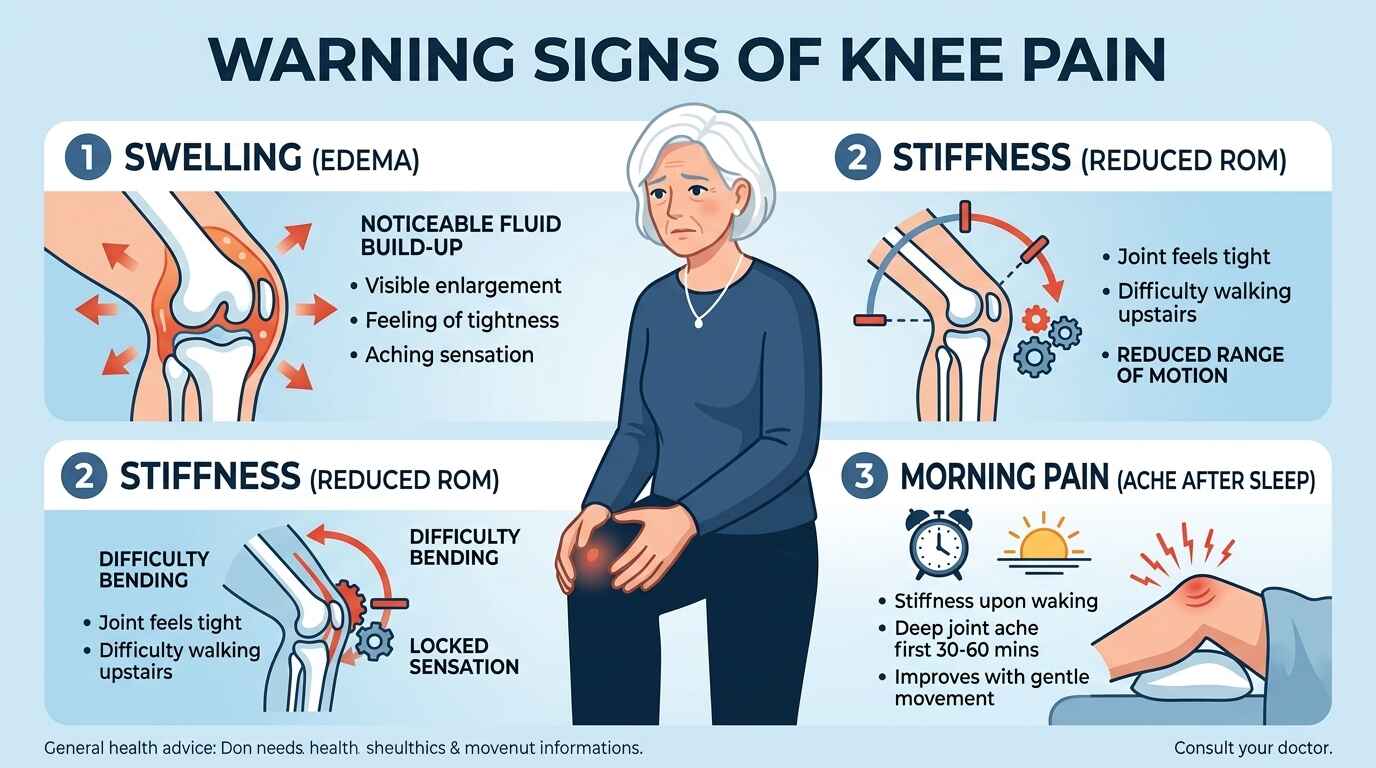
Mild, occasional stiffness, especially first thing in the morning, is common and often harmless. Some signs mean you should get it checked rather than wait it out:
- Joint pain that lasts more than a few weeks without improving
- Swelling, redness or warmth around a joint
- A joint that feels unstable or gives way
- Pain that wakes you at night
- Morning stiffness lasting longer than 30 minutes
- Joint pain with unexplained tiredness, fever or weight loss
- Trouble with everyday tasks such as gripping, climbing stairs or dressing
One sign on its own doesn’t confirm any condition, and this article can’t diagnose you. Only a clinician can do that. These patterns do tell you when it’s time to book the GP appointment you’ve been putting off. If your stiffness sits mainly in your neck, our guide to early symptoms of cervical spine damage may help you describe it.
Get urgent help if one joint suddenly becomes hot, red, swollen and very painful, especially with a high temperature or feeling shivery. Call your GP or NHS 111 the same day. A joint infection can damage the joint quickly, so don’t wait for a routine slot. Call 999 (UK) or 911 (USA) if you also feel confused, very unwell or short of breath.
Common Conditions Behind Joint Pain in Women Over 50
Several conditions become more common after 50, and many look alike at first. That’s why a proper assessment matters.
Osteoarthritis
Osteoarthritis is the most common form of arthritis. The cartilage in a joint gradually thins, and the joint becomes stiff and sore. It often affects the knees, hips and hands. Pain usually builds with activity and eases with rest, and you may hear or feel a grinding sensation. Morning stiffness typically settles within 30 minutes, which helps doctors tell it apart from inflammatory arthritis.
Rheumatoid Arthritis
In rheumatoid arthritis, the immune system mistakenly attacks the lining of the joints. It often affects both sides of the body, with swelling and morning stiffness that can last well beyond 30 minutes. Women develop it about three times as often as men, and it commonly starts in midlife. Early treatment protects the joints from lasting damage, so ask for a prompt appointment if you suspect it.
Polymyalgia Rheumatica
This condition causes pain and stiffness in the shoulders, hips and neck, often worse in the morning. It mostly affects people over 50 and can come on within days or weeks. Doctors can treat it, but you need a diagnosis first. If your shoulders or hips have become suddenly stiff and sore, see your GP soon.
Osteoporosis and Your Joints
Osteoporosis weakens bones rather than joints, and it usually causes no pain until a bone breaks. It still belongs in this conversation. Falling oestrogen after menopause affects bone density, and a fracture or changes in posture can put extra strain on the hips and spine. Your GP may suggest a bone density assessment if you have risk factors.
Fibromyalgia
Fibromyalgia causes widespread pain, fatigue and sleep problems. It can feel like joint pain, and it often appears or worsens in the menopausal years. Unlike arthritis, it doesn’t damage the joints, and scans usually look normal. That can make diagnosis slow and frustrating, but treatment and self-management can help.
Gout
We often think of gout as a man’s problem, yet it becomes more common in women after menopause. Uric acid crystals build up in a joint and cause sudden, severe pain, swelling and redness, classically in the big toe. See your GP promptly if you think you have gout, because treatment works best when it starts early.
These conditions need different treatment, so searching online can’t replace a proper assessment. Your GP or a rheumatologist will look at your whole pattern of symptoms, blood tests and scans together instead of relying on any single sign.
Getting a Clinical Diagnosis: What to Expect
A visit about persistent joint pain usually follows a set pattern. Your GP will ask about your symptoms, family history and daily life. They’ll then examine the affected joints, checking for swelling, warmth, tenderness and how far each one moves.
You may have blood tests, which can look for signs of inflammation, rheumatoid arthritis or raised uric acid. You might also have an X-ray or MRI scan. X-rays show cartilage loss and bone changes, while MRI gives a more detailed picture of soft tissues. Doctors don’t always need a scan for osteoarthritis, though. If you’re over 45 with typical symptoms, they can often diagnose it from your history and examination alone.
Your GP may refer you to a specialist, particularly if the results are unclear or your symptoms are significant. A rheumatologist usually treats inflammatory and autoimmune joint conditions. An orthopaedic specialist focuses on structural problems, including those that might need surgery.
NHS waiting times for non-urgent appointments vary a lot by area. Some women explore private care for that reason, and we cover it shortly. While you wait, keep a simple symptom diary. Note which joints hurt, what eases or worsens the pain and how long morning stiffness lasts. It gives your clinician useful clues.
NHS Support and Treatment for Joint Pain
The NHS pathway starts with your GP and can extend to physiotherapy, rheumatology and orthopaedic services. NHS support and treatment usually includes pain management advice, physiotherapy, prescribed pain relief or anti-inflammatory treatment and, in more advanced cases, injections or surgery.
Guidelines generally recommend starting with the least invasive options, such as exercise, weight management support and physiotherapy, before moving on to medication or surgery. That stepped approach makes clinical sense, even if it feels slow when you’re sore every day.
Many areas now let you refer yourself for NHS physiotherapy without seeing a GP first. Check your surgery’s website or your local Integrated Care Board if you live in England. Some areas also run musculoskeletal (MSK) triage services that direct you to the right team more quickly.
If your symptoms suggest an inflammatory condition such as rheumatoid arthritis, the NHS aims to move you through faster, because early treatment improves long-term outcomes. Not sure where to begin? Your GP is the gateway to NHS musculoskeletal care, so that first appointment is the most important step.
Private Clinic and Specialist Referral Options
A private clinic can be worth considering if you want a specialist sooner or a second opinion. Private musculoskeletal clinics across the UK offer direct access to rheumatologists, orthopaedic consultants and physiotherapists. For non-urgent problems, waits can be days or weeks instead of months.
A typical private pathway starts with a consultation, then imaging if needed, then a treatment plan. That plan might include physiotherapy, injections or a surgical assessment. Some clinics offer scans within a day or two.
Costs vary with the clinic, the location and the tests involved. Ask for a written breakdown of fees before you commit. A specialist consultation usually costs more than a GP visit, and scans, blood tests and follow-ups add to the bill.
Many women use a mixed approach. They pay privately for a quick diagnosis, then return to the NHS for ongoing treatment. That can work well if you need long-term management or surgery, and your GP can usually guide you on how to move between the two.
Treatment Options Available: From Medication to Therapy
There’s a wide range of treatment options available for joint pain. What works for one woman may not suit another, so the right plan depends on the cause, the severity and your own health history and preferences.
Medication and Prescription Treatment
Over-the-counter pain relief can help with mild to moderate pain. Anti-inflammatory gels rubbed onto the skin are often a good first choice for knee or hand osteoarthritis, with fewer side effects than tablets. Anti-inflammatory tablets don’t suit everyone. Ask your pharmacist or GP first if you have stomach, kidney, heart or asthma problems, or if you take blood thinners. Our guide to kidney function and what affects it explains why your kidneys matter here. For inflammatory conditions such as rheumatoid arthritis, specialists prescribe disease-modifying drugs (DMARDs). They slow the disease itself instead of only easing pain.
Physiotherapy and Exercise
Exercise and physiotherapy sit at the heart of long-term care. A good physiotherapist builds a programme to strengthen the muscles around your joints, improve flexibility and correct movement habits that add strain. They’ll increase the difficulty gradually, and they may add manual therapy or taping for extra support.
Joint Injections
A corticosteroid injection into a joint can ease pain and swelling for several weeks, sometimes a few months. Doctors use them for flare-ups, particularly in the knee, and limit how often you have them. Hyaluronic acid injections are different. NICE doesn’t recommend them for osteoarthritis because the evidence of benefit is weak.
Surgical Options
Surgery is for severe joint damage that hasn’t improved with other treatment. It ranges from keyhole procedures to full joint replacement. You and your specialist will decide together, weighing your symptoms against the risks and recovery time.
Hormone Replacement Therapy
If your joint pain started with the menopause, your GP may discuss HRT as part of a wider plan to manage your symptoms. They’ll look at your full health history, including any risks that affect whether it’s suitable.
Psychological and Complementary Approaches
If pain is wearing you down, a pain-management programme using mindfulness or cognitive behavioural techniques can help you cope. Supplements are a different matter. Evidence for many of them is weak, and NICE doesn’t recommend glucosamine for osteoarthritis. Speak to your GP or pharmacist before you buy anything, and use these approaches alongside medical care, never in place of it.
Lifestyle Changes That Genuinely Help

Alongside clinical care, everyday habits can make a real difference to how your joints feel:
- Gentle, regular movement. Swimming, walking, cycling and yoga keep joints mobile without heavy impact. Most women tolerate them better than running on hard surfaces. Some discomfort is normal, but sharp or lasting pain means you should ease off.
- A healthy weight. Extra weight puts more load on your knees and hips. Research suggests that even modest weight loss can reduce knee pain, so small steps count.
- Mediterranean-style eating. Oily fish, leafy greens, nuts, pulses and olive oil support your general health and heart. No food cures arthritis, but a varied diet helps you manage your weight and feel your best.
- Strength training. Stronger muscles take pressure off your joints, which matters more as muscle mass declines with age. A physiotherapist can show you safe moves.
- Good sleep. Poor sleep makes pain feel worse, and pain makes sleep harder. If menopause is disturbing your nights, tell your GP.
- Stress management. Slow breathing, gentle stretching and regular breaks from sitting can ease tension and help you cope with pain.
- Supportive footwear. Cushioned, well-fitting shoes reduce the strain that travels up through your knees and hips.
None of this replaces medical treatment when you need it. These habits do work well alongside it, and small changes add up over weeks and months.
The Mental Health Side of Chronic Joint Pain
Ongoing joint pain affects far more than your body. Many women describe a quiet grief for the ease they’ve lost: kneeling in the garden, playing on the floor with grandchildren or walking far without planning around the pain. Frustration is common, and so is embarrassment if pain limits your independence.
That emotional weight is real, and mental health support is a proper part of pain care. Pain can lower your mood and raise anxiety, and low mood can make pain feel stronger. Researchers think the two may share some pathways involving inflammation and the nervous system, although they haven’t settled the details. Our nervous system regulation guide covers calming techniques that some people find useful alongside medical care.
If pain is affecting your mood, sleep or sense of who you are, tell your GP. You don’t have to cope alone. Options include talking therapies and pain programmes that combine physical and psychological support. Even an honest chat about how you’re really feeling is a good start.
Health Insurance and Covering the Cost of Treatment
If you’re considering private care, check your health insurance early. Many UK policies cover consultations, scans and some treatment for musculoskeletal problems, but cover differs widely between providers and policy levels.
Read your policy or call your insurer before you book anything. Some policies insist on a GP referral first, while others allow direct access to a specialist. If you don’t have insurance, many clinics offer self-pay options with itemised prices.
For independent, evidence-based information, take a look at the NICE clinical guidelines. NHS clinicians across the UK use them, and NICE updates them regularly.
When to Speak to Your GP About Joint Pain After 50
If you remember one thing from this guide, make it this: joint pain after 50 is common, but that doesn’t mean you should ignore it. Speak to your GP if the pain has lasted more than a few weeks, is getting worse, disturbs your sleep or daily life, or comes with swelling, warmth, fever or other unusual symptoms.
Earlier conversations lead to earlier answers, and earlier answers keep more treatment options open, whether that’s lifestyle changes, physiotherapy or medication. Call NHS 111 or your GP the same day if a single joint turns hot, red and swollen, particularly with a fever.
Frequently Asked Questions
Is joint pain after 50 always related to menopause?
No. Falling oestrogen can add to aches and stiffness, but osteoarthritis, rheumatoid arthritis, gout and other conditions are also common after 50. The pattern of your symptoms gives clues. Only your GP can work out the cause, so book a visit if pain lasts more than a few weeks.
Can joint pain after 50 be reversed?
Sometimes. Pain from weak muscles, extra weight or lack of movement can improve a lot with exercise and physiotherapy. Cartilage changes in osteoarthritis can’t be fully reversed. Treatment still eases pain, keeps you moving and slows damage in inflammatory conditions, so seeing your GP early gives you the most options.
Should I see a GP or go straight to a private clinic?
Start with your GP in most cases. They can check your symptoms, arrange tests and refer you on the NHS. Private clinics offer quicker specialist appointments if you can pay or have insurance. Many insurers still ask for a GP referral first, so check your policy before you book.
Does HRT help with joint pain?
Some women notice less joint pain after starting HRT, but the evidence is limited and doctors don’t prescribe it for joint pain alone. HRT suits some women and not others, depending on health history. Talk to your GP about the benefits and risks for you.
What exercises are safe for joint pain?
Low-impact activities such as walking, swimming, cycling and yoga usually suit painful joints. Gentle strength work helps too. A little discomfort is normal, but sharp or lasting pain isn’t. Ask your GP about physiotherapy, or self-refer where your area allows, for a plan that fits your joints.
Will my health insurance cover joint pain treatment?
It depends on your policy. Many UK plans cover consultations, scans and physiotherapy, but limits, excesses and referral rules vary. Some insurers want a GP letter first. Call your insurer before booking anything, and ask exactly what they’ll pay for before you commit.
When is joint pain an emergency?
Get urgent advice if a joint suddenly turns hot, red and swollen, especially with a fever, or if you can’t move it or put weight on it. Call NHS 111 or your GP the same day. Pain lasting weeks, or morning stiffness beyond 30 minutes, needs a routine GP appointment.
Sources and further reading
- NHS – Joint pain
- NHS – Rheumatoid arthritis: Symptoms
- NICE NG226 – Osteoarthritis in over 16s: diagnosis and management
- NICE NG100 – Rheumatoid arthritis in adults: management
- NICE NG23 – Menopause: identification and management
Disclaimer
This article is for general information and education only. It isn’t medical advice, diagnosis or treatment. Joint pain has many possible causes, and only a qualified healthcare professional can give you an accurate diagnosis for your circumstances. If you have joint pain or related symptoms, speak to your GP or a qualified specialist before you make any decisions about treatment.