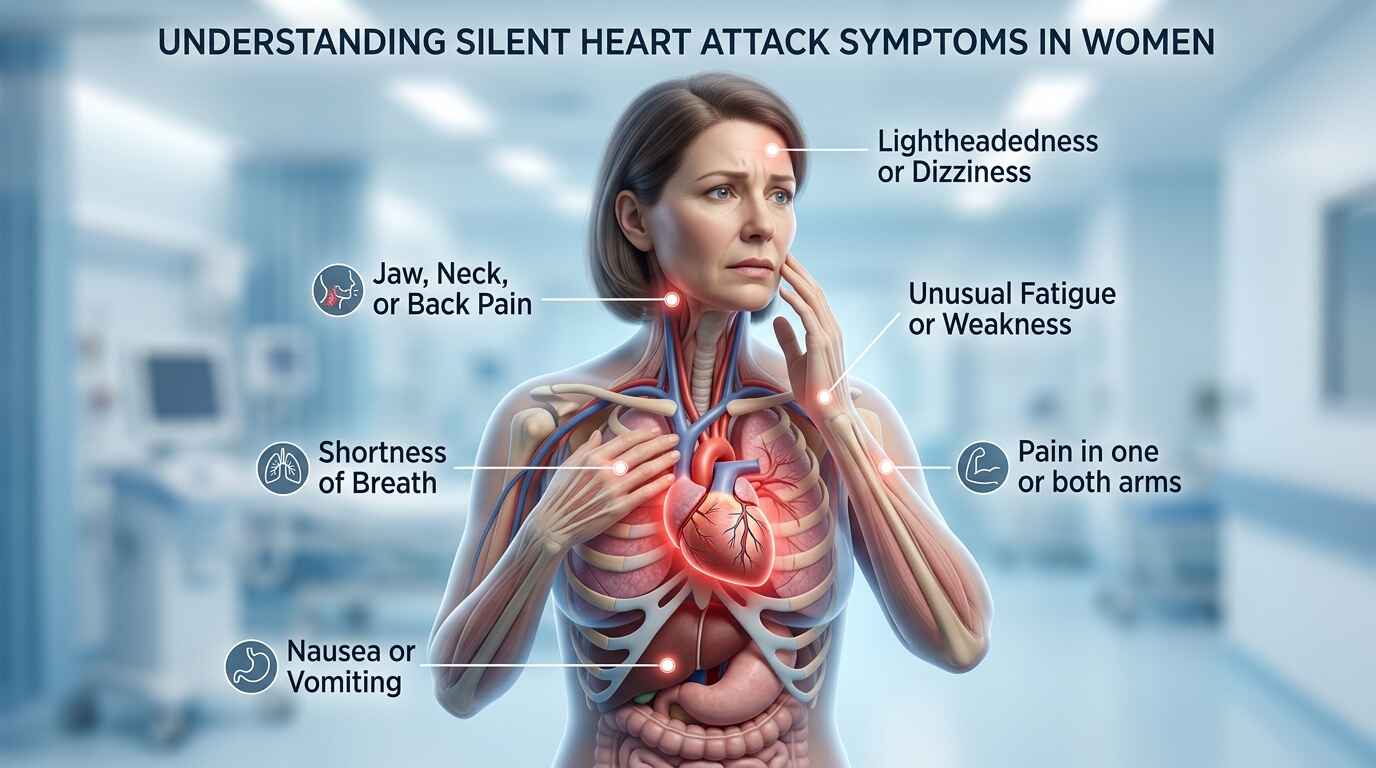
Picture a week of heavy tiredness, a dull ache in your jaw and a bit of breathlessness on the stairs. You blame poor sleep and a busy month. Months later, a routine heart test shows scarring from a heart attack you never noticed. The silent heart attack signs in women are often mild and easy to mistake for everyday problems, so many go unrecognised. This guide won’t frighten you. It will help you spot the signs, understand your risk and know when to ask for help.
If you have chest pain or pressure, pain spreading to your arm, jaw or back, or sudden breathlessness with a cold sweat right now, call 999 (UK) or 911 (USA) straight away. Don’t wait for more information from an article.
Heart disease is the leading cause of death for women in the USA and one of the major causes in the UK. Many people still see it as a “man’s problem”. Women’s hearts are just as vulnerable, but the warning signs can look different.
What Exactly Is a Silent Heart Attack?
A silent heart attack, or silent myocardial infarction, happens when blood flow to part of the heart is blocked and the heart muscle is damaged without the dramatic symptoms most of us expect. You don’t clutch your chest or collapse. Some people feel nothing at all. Others have a vague tiredness, an odd ache in the jaw or a few minutes of breathlessness that they put down to something else.
How common is it? Some large studies suggest that a sizeable share of heart attacks go unrecognised when they happen. Silent attacks affect both women and men, and researchers are still working out how the numbers differ. Doctors usually find them later, often by chance on a test done for another reason.
The danger lies in the delay. When heart muscle loses its blood supply, cells begin to die within minutes, which is why cardiologists say “time is muscle”. If nobody recognises the attack, you miss the chance of treatment to open the blocked artery. The scar that forms can weaken the heart and raise your risk of future problems, including another heart attack, heart failure or an irregular heartbeat.
A truly silent attack may cause no symptoms at all. More often, women have mild or unusual symptoms that they explain away. This guide covers both, because the practical advice is the same: take new, unexplained symptoms seriously.
Silent Heart Attack Signs in Women: The Symptoms You Need to Know
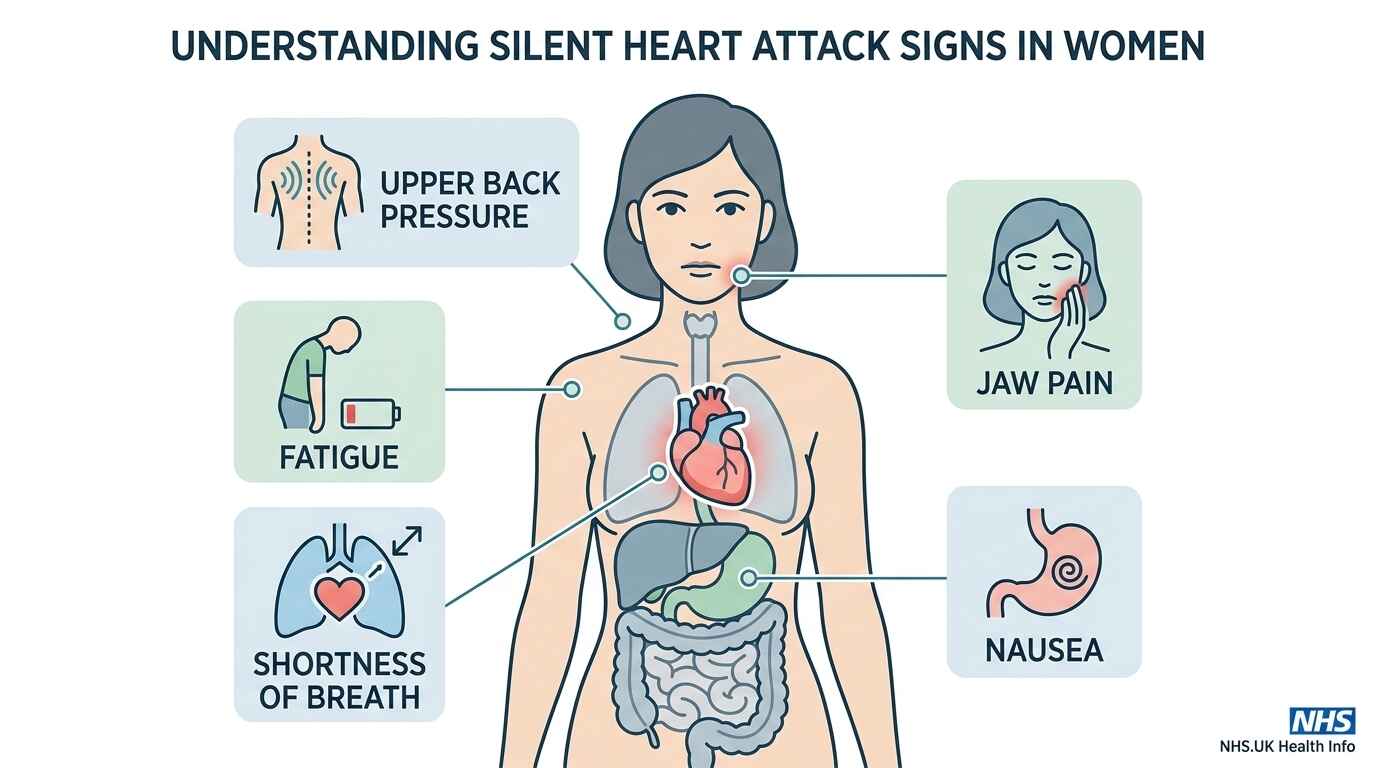
Women often have different symptoms from the crushing chest pain shown on TV. Chest pain or discomfort is still the most common sign in women too, so never rule it out. Women are also more likely than men to have the other symptoms below, sometimes alone and sometimes together. Here’s what women most often report.
Unusual, Overwhelming Tiredness
This isn’t the tiredness of a long day. It feels heavy, lasts for days and doesn’t lift with rest. Many women say they struggled to wash their hair or climb the stairs. Some look back and recall feeling like this for days or weeks before doctors found a heart problem.
Shortness of Breath Without Much Effort
You might feel winded after a short flight of stairs, or struggle to catch your breath doing something you’ve always managed easily. Some women notice it when lying flat. People often blame being out of shape or anxiety, so the sign gets brushed aside.
Discomfort in the Jaw, Neck or Upper Back
Women are more likely than men to feel pain away from the chest, in the jaw, neck, shoulders or between the shoulder blades. It can pass for toothache, a tension headache or a pulled muscle. Pain that comes with breathlessness, sweating or sickness deserves extra attention.
Nausea and Stomach Upset
Feeling sick, vomiting or having an uncomfortable stomach can be part of a heart attack. These symptoms look like food poisoning or acid reflux, so people often misread them. If you feel unwell in this way alongside breathlessness, sweating or pain elsewhere, think of your heart.
Chest Pressure, Tightness or Discomfort
Many women do have chest symptoms. They just don’t always match the movie version. It may feel like pressure, squeezing, heaviness or a band across the chest, and it may come and go. Some women say it felt like bad indigestion. Chest discomfort that lasts more than a few minutes needs a 999 or 911 call.
Dizziness and Light-Headedness
A sudden wave of dizziness or feeling faint can mean your heart isn’t supplying enough blood. It may last only seconds but return over several days. Women often blame low blood sugar, dehydration or stress. Repeated episodes need a GP check.
Cold Sweats
A sudden cold sweat with no obvious cause, such as heat or exercise, deserves attention. Around the menopause, it’s easy to put it down to hormones. If a cold sweat comes with any other symptom on this list, treat it as an emergency.
Why Are These Signs So Easily Missed?
Knowing why symptoms get missed helps you avoid the same trap. Several reasons overlap, and they affect both women and the professionals who treat them.
The Heart Attack Myth
Films, TV dramas and older health campaigns often show a man collapsing with crushing chest pain. When a woman’s experience looks different, she’s more likely to wait and see. That delay can cost heart muscle.
Symptoms That Look Like Everyday Problems
Tiredness, nausea, breathlessness and back pain all have common, harmless explanations. Women often link them to stress, periods, perimenopause, poor sleep or simply doing too much. That’s a reasonable guess most of the time, which is exactly why heart symptoms slip through.
Gaps in Diagnosis
Research suggests women are less likely than men to get a prompt, correct diagnosis when they have a heart attack. The British Heart Foundation has highlighted analysis pointing to a higher chance of a wrong first diagnosis in women. Studies from the USA show similar patterns, so the problem isn’t limited to the UK. If your symptoms are new and unexplained, say so clearly.
Putting Everyone Else First
Many women play down their symptoms. They don’t want to make a fuss, waste anyone’s time or be told they’re overreacting. Plenty later say they knew something was wrong and hoped it would pass. Your health counts as much as anyone else’s, and no one will think less of you for asking.
Who Is Most at Risk? Understanding the Risk Factors
Any woman can have a heart attack, but some factors raise the odds. Knowing yours is a good first step towards prevention.
Age and the Menopause
Heart disease risk rises in women after the menopause, usually from around 50 to 55. Before then, oestrogen seems to offer some protection. Once levels fall, that advantage fades. Younger women can have heart attacks too, particularly if they have other risk factors.
High Blood Pressure
High blood pressure is one of the biggest risk factors you can change. It puts constant strain on your artery walls and contributes to plaque build-up. Many women have it for years without knowing, because it usually causes no symptoms. Only a simple blood pressure check will tell you. Our guide to heart blockage symptoms and high blood pressure explains the link in more detail.
Type 2 Diabetes
High blood sugar over time damages blood vessels. Women with type 2 diabetes have a higher risk of heart disease than women without it, and it can cancel out the lower risk women usually have compared with men. Good diabetes management protects your heart too. You can read more about how diabetes and high blood pressure affect the kidneys.
Smoking
Smoking narrows and hardens the arteries, and it raises heart attack risk in women and men alike. Some research suggests the effect may be stronger in women, although the findings aren’t settled. Stopping is one of the most effective things you can do for your heart, and the NHS offers free support.
Family History
Your risk rises if a close relative developed heart disease early: a father or brother before 55, or a mother or sister before 65. Tell your GP about it, because they’ll factor it into your health checks.
Stress, Low Mood and Anxiety
Long-term stress, depression and anxiety are linked with higher heart risk. Some studies suggest the link may be stronger in women, though the research is still developing. Stress can disturb sleep, push up blood pressure and make healthy habits harder to keep, and these effects add up. Our nervous system regulation guide offers practical ways to settle your stress response.

What Happens to the Body During a Silent Heart Attack?
A heart attack happens when a coronary artery, one of the vessels feeding the heart muscle, becomes blocked. Most often, fatty plaque inside the artery cracks and a blood clot forms over it. The clot cuts off oxygen to the muscle beyond it.
Without oxygen, heart muscle cells start to die within minutes. Doctors call that damage necrosis, and it can’t be reversed. Scar tissue replaces the lost muscle. Scar doesn’t contract like healthy muscle, so a large scar can weaken the heart’s pumping.
In a typical heart attack, severe symptoms push you to call for help. In a silent one, that alarm never sounds. The scar forms quietly, and doctors may only find it years later on an ECG or scan. Finding out can come as a real shock. It also gives you a chance to protect your heart from now on.
How Is a Silent Heart Attack Diagnosed?
Doctors usually find a silent heart attack after the event, often during tests ordered for another reason. Several tools can show evidence of past damage. Not everyone needs them, and your GP will decide what suits your symptoms and risk.
Electrocardiogram (ECG)
An ECG records your heart’s electrical activity. Certain patterns, such as Q waves, can suggest that part of the heart muscle was damaged in the past. An ECG can also look normal even when a problem exists, so doctors read it alongside your symptoms.
Blood Tests (Troponin)
When heart muscle is injured, it releases a protein called troponin into your blood. Doctors use troponin tests to confirm a recent heart attack, because levels rise within hours and fall again over days. The test can’t reveal an attack from months or years ago.
Echocardiogram
An echocardiogram uses ultrasound to create moving pictures of your heart. It can show parts of the heart wall that move weakly, which can happen after muscle damage. It also measures how well the heart pumps.
Cardiac MRI
A cardiac MRI gives very detailed pictures of the heart. It’s one of the best ways to see scar tissue from an earlier heart attack, including small areas other tests might miss. Doctors usually keep it for cases where other tests leave questions.
For clear, trustworthy information on heart attack symptoms and diagnosis, the British Heart Foundation is a good place to start.
What Should You Do If You Suspect a Silent Heart Attack?
If you have symptoms from this guide, especially several together or ones that are new and persistent, act promptly. Don’t tell yourself it’s just stress. Don’t wait to see how you feel tomorrow.
In an Emergency
Call 999 in the UK or 911 in the USA straight away if you have chest pain or pressure, pain spreading to your arm, jaw or back, sudden breathlessness or a cold sweat. Don’t drive yourself to hospital. Sit down and stay as calm as you can.
The NHS says that if you’re not allergic to aspirin and the ambulance is on its way, you can chew one 300mg aspirin slowly, unless the emergency operator tells you not to. Never give aspirin to anyone under 16. Follow the operator’s instructions, because they’ll know what’s right for your situation.
If You’re Worried but It Isn’t an Emergency
Book a GP appointment soon if your symptoms are vague, keep coming back or simply concern you. Describe exactly what you feel, when it happens and how long it lasts. A short symptom diary helps. Ask whether tests such as an ECG would suit you. If you feel your worries aren’t being heard, say so politely and ask for your concerns to be noted.
Routine Heart Health Checks
If you’re over 40 or have risk factors, ask your GP about a heart health check. In England, the NHS Health Check offers a free assessment to adults aged 40 to 74 every five years. In the USA, the American Heart Association recommends regular checks of blood pressure, cholesterol and blood sugar.
Lifestyle Changes That Can Reduce Your Risk
No habit guarantees you’ll avoid a heart attack. Good evidence does show that certain changes lower your risk, and small steps still count.
Move Daily
Regular activity strengthens your heart, helps control blood pressure and supports a healthy weight. The NHS recommends at least 150 minutes of moderate activity a week for adults. A brisk 30-minute walk on five days a week gets you there.
Eat for Your Heart
Fill your plate with vegetables, fruit, wholegrains, beans, fish and healthy fats like olive oil. Cut back on processed food, added sugar and salt. The Mediterranean-style pattern has good evidence for protecting heart health, and you can ease into it one meal at a time.
Stop Smoking
Stopping smoking is one of the best things you can do for your heart. Your risk begins to fall soon after you quit and keeps falling over the following years. Your GP, pharmacist or local stop smoking service can offer free help, which makes quitting much more likely to work.
Manage Stress
Long-term stress takes a toll on your heart, and looking after yourself isn’t self-indulgent. Walking, talking to a friend, time outdoors, mindfulness or counselling all help. Pick something you’ll enjoy enough to keep doing.
Know Your Numbers
Blood pressure, cholesterol and blood sugar all affect your heart, and you can’t feel any of them. Ask your GP or pharmacist to check them, then work together to keep them in a healthy range. Our article on how high cholesterol affects your health explains why cholesterol matters. You can only manage what you’ve measured.
Related Health Topics Worth Reading
Silent heart attack signs sit within a wider picture of heart and whole-body health. These guides may help:
- Heart Blockage Symptoms and High Blood Pressure
- How High Cholesterol Affects Your Health
- Diabetes and High Blood Pressure: How They Damage the Kidneys
- Nervous System Regulation Guide
The Bottom Line
Silent heart attack signs in women are often mild: unusual tiredness, breathlessness, jaw or back discomfort, nausea or a cold sweat. Chest pain or pressure can still appear too. You don’t need to live in fear. Learn the signs, know your blood pressure and cholesterol, look after your heart day to day and tell your GP about symptoms that are new and don’t settle. If you ever think it could be your heart, call 999 or 911 straight away.
Frequently Asked Questions About Silent Heart Attacks
Can you have a silent heart attack and feel completely normal?
Yes. Some people have no symptoms at all, and others have mild ones they put down to tiredness, indigestion or stress. Doctors often discover the damage later on a routine test. Having no pain doesn’t mean the heart escaped harm, so tell your GP about any unexplained symptoms.
How would I know if I had a silent heart attack in the past?
Doctors usually find evidence by chance, often on an ECG done for another reason. An echocardiogram or cardiac MRI can then show scarring or weaker movement in the heart wall. If you worry you’ve had an unnoticed attack, ask your GP whether tests would suit you.
Are silent heart attacks more dangerous than regular heart attacks?
They cause the same kind of damage, but nobody treats them at the time, so there’s no chance to restore blood flow quickly. Studies suggest people who’ve had one face a higher risk of later heart problems. Treatment and healthier habits can lower that risk, so a diagnosis gives you a useful starting point.
What age are women most at risk of a silent heart attack?
Risk rises after the menopause, usually from around 50 to 55, as oestrogen’s protective effect falls. Younger women can have heart attacks too, particularly with high blood pressure, diabetes, smoking or a family history of early heart disease. Age is just one piece of your overall risk.
Can anxiety mimic silent heart attack signs in women?
Yes. Anxiety can cause chest tightness, breathlessness, palpitations, dizziness and nausea, which overlap with heart symptoms. You can’t reliably tell the two apart yourself. If you have chest pain or other symptoms that could be cardiac, and they’re new or severe, call 999 or 911 instead of waiting.
Is there a test that can predict a silent heart attack before it happens?
No single test can predict one. Your GP can estimate your risk using your age, blood pressure, cholesterol, smoking status and family history, for example through an NHS Health Check. Some people with a higher risk or symptoms may be offered further tests, such as a scan.
What should I do if I think I’m having a heart attack right now?
Call 999 or 911 immediately and don’t drive yourself. Sit down and stay calm. If you’re not allergic and an ambulance is coming, the NHS says you can chew one 300mg aspirin unless the operator advises otherwise. Never give aspirin to anyone under 16.
Sources and further reading
⚠️ Medical Disclaimer
This article is for general information and health awareness only. It isn’t medical advice, diagnosis or treatment, and it can’t replace a consultation with a qualified healthcare provider. Speak to your GP, cardiologist or another qualified professional about any medical question, and never delay seeking advice because of something you’ve read here. If you think you’re having a medical emergency, call 999 (UK) or 911 (USA) immediately.