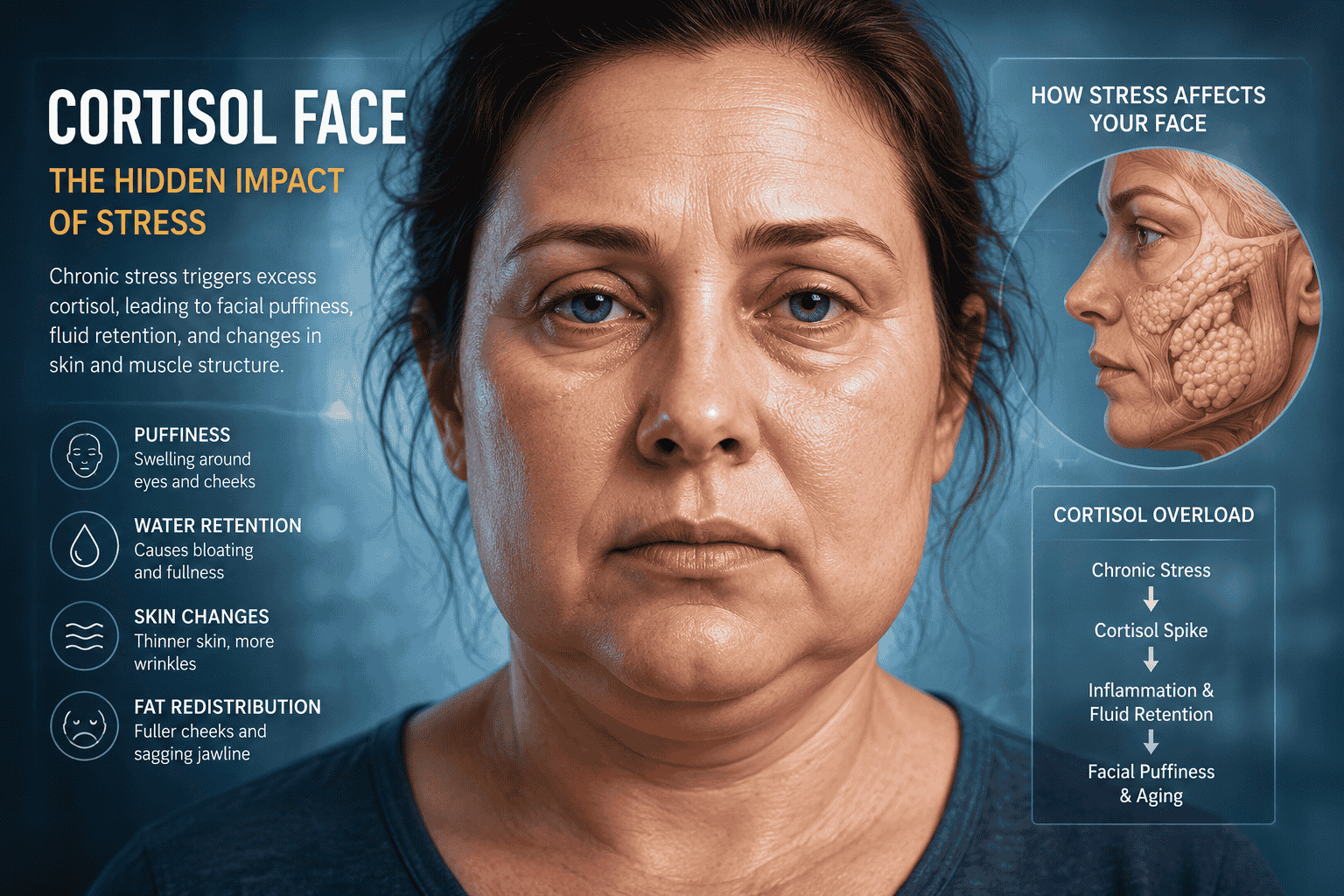
If your TikTok feed has been full of before-and-after videos claiming to “fix” puffy cheeks and a rounder jawline, you’ve probably already heard the term cortisol face. It’s one of the fastest-growing wellness conversations of 2026, with hundreds of millions of views across TikTok and Instagram. But is cortisol face an actual medical condition, or is it simply a catchy label for something much more familiar — the visible toll that chronic stress takes on your body? In this guide, we’ll walk through what this trend really means, the science behind it, the signs to watch for, and gentle, evidence-informed ways people try to support their stress response and daily wellbeing. We’ll also look at how this differs from everyday bloating, what role diet and gut health may play, and when a change in your face is worth mentioning to a GP rather than a TikTok comment section.
What Is Cortisol Face?
Cortisol face is a term used online to describe facial puffiness, rounding, or a “moon-like” fullness that some people associate with chronically elevated cortisol, the hormone your adrenal glands release in response to stress. The phrase isn’t an official diagnosis you’ll find in a GP’s handbook. Instead, it has emerged from social media as a shorthand for a cluster of appearance changes — bloating around the cheeks and jaw, under-eye puffiness, and a generally “tired and swollen” look — that people notice during periods of high stress, poor sleep, or irregular eating patterns.
It’s worth being clear from the outset: cortisol face is not a clinical term, and puffiness alone doesn’t mean your cortisol levels are abnormal. True, persistently high cortisol is linked to a recognised medical condition called Cushing’s syndrome, which does cause facial rounding among other symptoms, but this is relatively rare and requires proper medical testing to diagnose. For most people talking about this online, what they’re really describing is everyday fluid retention, inflammation, and fatigue linked to stress, poor sleep, or dietary habits — not a hormonal disorder.
The confusion between “cortisol face” and genuine cortisol-related illness is understandable, because the visual overlap can look similar at a glance. Cushing’s syndrome, caused by prolonged exposure to high cortisol levels — sometimes from certain medications, sometimes from a tumour affecting the adrenal or pituitary glands — produces a distinctly rounded “moon face,” along with a collection of other symptoms that develop gradually over months. The everyday version of this trend that circulates on social media is usually far more temporary, fluctuating with sleep quality, hydration, salt intake, and stress levels from one week to the next. Recognising this distinction matters, because it stops people from either panicking unnecessarily over normal puffiness or, just as importantly, dismissing genuine symptoms that deserve medical attention.
Cortisol Face vs Everyday Bloating: How to Tell the Difference
One of the most common questions people ask after seeing this content is how to know whether their own puffiness is stress-related, diet-related, or simply normal day-to-day variation. While only a GP can offer a proper assessment, there are some general patterns worth understanding.
Everyday facial bloating — the kind almost everyone experiences occasionally — tends to appear suddenly, often after a salty meal, a poor night’s sleep, or a night out involving alcohol. It usually settles within a day or two once normal habits resume. The puffiness linked to what’s described this way is typically framed as more persistent, building gradually over weeks or months of ongoing stress, disrupted sleep, or irregular routines, rather than appearing overnight.
Genuine cortisol-related medical conditions, by contrast, tend to bring a wider constellation of symptoms beyond the face alone — including changes in body shape, skin changes, fatigue that doesn’t improve with rest, and blood pressure changes. If facial puffiness is isolated, mild, and fluctuates with obvious lifestyle triggers, it’s far more likely to reflect ordinary bloating than any hormonal irregularity. If it’s persistent, worsening, or paired with other unexplained symptoms, that’s the signal to seek a professional opinion rather than a wellness routine.
What Causes the Look Associated With Cortisol Face?
Understanding what might contribute to the appearance people describe this way starts with understanding cortisol itself. Cortisol is often nicknamed the “stress hormone” because it rises when your body perceives a threat, whether that’s a genuine emergency or the slow-burn pressure of a demanding job, poor sleep, or constant notifications. In short bursts, cortisol is protective — it helps regulate blood sugar, blood pressure, and inflammation. The concern many wellness creators raise is about what happens when cortisol stays elevated for long stretches without a chance to reset.
Several everyday factors are commonly discussed as contributors to this puffiness:
- Chronic stress — ongoing pressure at work, financially, or emotionally may keep the body’s stress response switched on for longer than it’s designed to be.
- Poor or irregular sleep — sleep is when the body regulates hormone rhythms, including the natural rise and fall of cortisol across the day.
- High sodium intake — a diet heavy in processed or salty foods may encourage the body to retain more fluid, which can show up first in the face.
- Alcohol consumption — alcohol can disrupt sleep quality and hydration, both of which may contribute to next-day puffiness.
- Dehydration — paradoxically, not drinking enough water can cause the body to hold onto the fluid it does have.
- Inconsistent eating patterns — skipping meals or frequent blood sugar swings are sometimes linked to stress hormone fluctuations.
None of these factors guarantee that someone will develop this look, and most puffiness is temporary and unrelated to any underlying condition. But the combination of stress, poor sleep, and diet is a common thread in how people online describe their own experience of it.
It’s also worth mentioning hormonal fluctuations more broadly. Cortisol doesn’t operate in isolation — it interacts with other hormones, including insulin, oestrogen, and thyroid hormones, all of which can influence fluid balance and inflammation in their own right. This is one reason two people with similar stress levels might notice very different facial changes, or none at all. Genetics, baseline hydration habits, and even how much salt someone is used to consuming day-to-day can all shape whether stress shows up visibly on the face. This is part of why the trend is best understood as a broad, individual pattern rather than a predictable, one-size-fits-all outcome of stress.
Common Signs People Associate With Cortisol Face
While there’s no official checklist, the wellness community has settled on a fairly consistent set of signs when describing it. These typically include:
- Fullness or rounding through the cheeks that wasn’t there before
- Puffiness around the eyes, especially first thing in the morning
- A jawline that appears softer or less defined
- Skin that looks flushed, blotchy, or inflamed
- A general feeling of tiredness alongside the facial changes
It’s important to remember that facial puffiness has many everyday causes that have nothing to do with cortisol — including allergies, sinus congestion, dental issues, sleeping position, and simply a poor night’s sleep. If someone notices sudden, significant, or persistent facial swelling, particularly alongside other symptoms like unexplained weight gain, muscle weakness, or stretch marks, this is a reason to speak to a GP rather than to self-diagnose using social media as a guide.
Many people also report that this appearance seems worse first thing in the morning and gradually eases across the day as they move around, hydrate, and become more upright. This pattern is consistent with ordinary fluid shifts that happen overnight, when lying flat allows fluid to settle more evenly across the face, rather than being a hallmark of anything more serious. Keeping a simple diary of when puffiness appears, how long it lasts, and what happened the day before — poor sleep, a salty dinner, alcohol, a stressful event — can help people spot their own patterns and figure out whether lifestyle tweaks are likely to help.
Is Cortisol Face Backed by Science?
This is the question most health writers and endocrinologists get asked constantly, and the honest answer is nuanced. Cortisol absolutely plays a documented role in fluid balance and inflammation, and chronically elevated cortisol is a genuine clinical concern in conditions like Cushing’s syndrome. However, the specific claim that everyday stress reliably produces a distinct, identifiable facial change in otherwise healthy people has not been rigorously studied as its own phenomenon. Much of what’s shared under this label is really a mix of general stress-related bloating, sleep deprivation, and dietary patterns, repackaged into a viral, visual narrative.
That doesn’t make the underlying advice useless. Managing stress, prioritising sleep, staying hydrated, and moderating sodium intake are widely recognised as sensible habits for overall wellbeing, regardless of whether they specifically reverse a “cortisol face.” The risk lies in the more extreme claims circulating online — that a single supplement, drink, or “cortisol detox” can instantly and permanently reshape your face. Reputable health bodies, including the NHS’s guidance on Cushing’s syndrome, are clear that genuine cortisol-related facial changes require medical diagnosis and treatment, not a wellness routine bought from a TikTok Shop link.
If you’d like to see this explained visually, the video below from a practising doctor breaks down the science behind the cortisol face trend in a clear, accessible way.
Lifestyle Habits People Try to Manage Cortisol Face
Even without a formal diagnosis, many people find value in gentle lifestyle habits that support the body’s natural stress response. These are not cures, and they won’t guarantee a change in facial appearance, but they align with general wellbeing advice that GPs and dietitians often recommend regardless of the trend itself. For more depth on any single habit, see our dedicated guides to sleep hygiene and stress management.
1. Prioritise a Consistent Sleep Routine
Cortisol naturally follows a daily rhythm, peaking in the morning and gradually falling across the day. Going to bed and waking up at similar times, limiting screens before bed, and creating a dark, cool sleeping environment are habits frequently recommended to support this rhythm. Poor sleep is one of the most consistently cited contributors to next-day puffiness.
2. Moderate Sodium and Ultra-Processed Foods
Reducing reliance on heavily processed, high-sodium foods may help minimise water retention for some people. Reading nutrition labels, cooking more meals from scratch, and gradually cutting back on added salt are practical starting points rather than dramatic overnight changes.
3. Stay Consistently Hydrated
Rather than large amounts of water in one sitting, spreading fluid intake evenly across the day is generally considered more supportive of hydration balance. Herbal teas and water-rich foods like cucumber and watermelon can contribute to overall fluid intake too.
4. Build in Regular Movement
Gentle, regular physical activity — walking, stretching, or low-intensity exercise — is often suggested as a way to support circulation and stress regulation. Intense exercise without adequate recovery, on the other hand, is sometimes discussed as a potential added stressor on the body, so balance matters more than intensity alone.
5. Explore Stress-Reduction Techniques
Breathing exercises, journaling, time outdoors, and simply reducing screen time are commonly suggested low-cost ways some people try to manage day-to-day stress. These won’t eliminate life’s pressures, but many find they help create small pockets of calm.
6. Support Gut Health
There’s growing public interest in the connection between gut health and stress, sometimes referred to as the gut-brain axis. While the research in this area is still evolving, many people associated with this conversation also focus on fibre-rich foods, fermented foods, and reducing ultra-processed snacking as part of a broader wellbeing routine. A balanced, varied diet that supports digestion is generally considered good practice regardless of its direct impact on facial appearance.
7. Limit Digital Stress and Doomscrolling
It’s a slightly ironic point to make in an article inspired by a TikTok trend, but constant exposure to notifications, news, and comparison-driven content is frequently cited by wellbeing professionals as a modern stressor in its own right. Setting boundaries around phone use, particularly before bed, is a habit increasingly recommended alongside more traditional stress-management advice.
What About Supplements Linked to Cortisol Face?
Magnesium glycinate, ashwagandha, and L-theanine are frequently mentioned alongside this content, often promoted with dramatic before-and-after claims. Some early research has explored how these ingredients may interact with the body’s stress pathways, but the evidence is still developing, effects vary significantly between individuals, and supplements are not a substitute for medical care. Anyone considering a new supplement, particularly if pregnant, on medication, or managing an existing health condition, should speak with a GP or pharmacist first rather than relying on a viral TikTok recommendation. Our magnesium benefits guide covers this particular ingredient in more depth.
Cortisol Face and Skincare: What Actually Helps
Alongside supplements, a wave of skincare products has been marketed specifically around this trend, from “de-puffing” facial rollers to cortisol-blocking serums. It’s worth approaching these claims with the same caution applied to supplements. Topical products cannot alter internal hormone levels, no matter how the marketing is worded. That said, some skincare habits may offer temporary, cosmetic relief from puffiness, even if they aren’t addressing cortisol itself.
Cold compresses or chilled facial rollers can temporarily constrict blood vessels near the skin’s surface, which some people find reduces the appearance of morning puffiness for an hour or two. Gentle facial massage, often demonstrated in this content, may support lymphatic drainage in the short term, though the evidence for lasting change is limited. Staying consistent with a simple skincare routine, protecting skin from sun damage, and avoiding harsh over-exfoliation are all sensible habits that support overall skin health, regardless of whether they specifically target this puffiness.
The key message worth repeating here is that no serum, roller, or single product can substitute for addressing sleep, stress, hydration, and diet — the factors most consistently linked to the puffiness people describe as cortisol face.
Cortisol Face in the Age of Social Media: Separating Fact From Fiction
It’s worth stepping back to consider why this trend became such a viral topic in the first place. Social media rewards visual, relatable content, and facial appearance is something almost everyone can personally relate to. A term like this gives people language for something they’ve likely already noticed in themselves — feeling stressed and looking a little different for it — while also creating an easy hook for product marketing.
This doesn’t mean every piece of this content is misleading. Many creators genuinely share their own experiences and reasonable lifestyle advice. The issue tends to arise when normal, temporary bloating gets reframed as a serious hormonal problem requiring an expensive fix, or when correlation gets presented as guaranteed causation. Approaching this content the way you would any wellness trend — with curiosity, a willingness to try low-risk lifestyle habits, and healthy scepticism toward dramatic before-and-after claims — is generally the most balanced approach.
When to See a GP About Facial Changes
Most cases of temporary facial puffiness are harmless and resolve with better sleep, hydration, and a few days of consistent habits. However, it’s sensible to book a GP appointment if facial swelling is sudden, severe, only on one side, or accompanied by other symptoms such as:
- Unexplained or rapid weight gain
- New stretch marks, particularly purple or pink ones
- Muscle weakness, especially in the arms and legs
- High blood pressure readings
- Thinning skin that bruises easily
These can be signs of Cushing’s syndrome or another underlying condition, and only a GP can properly assess and test for this. Self-diagnosing “cortisol face” from a TikTok video is never a substitute for a proper medical opinion.
The Bottom Line on Cortisol Face
Cortisol face is less a medical diagnosis and more a modern, visual way of describing something people have experienced for generations: stress, poor sleep, and lifestyle habits showing up on our faces. There’s genuine value in the underlying advice — sleep well, moderate salt, stay hydrated, move your body, and find ways to manage stress — but it’s worth approaching viral cortisol face content with a healthy dose of scepticism, especially when it’s tied to expensive supplements promising overnight transformations. If you’re genuinely concerned about persistent facial swelling or other symptoms, your GP remains the most reliable place to start.
Frequently Asked Questions About Cortisol Face
Is cortisol face a real medical condition?
Cortisol face is not an official medical diagnosis. It’s a term that has emerged on social media to describe facial puffiness some people link to stress. Genuine, persistently high cortisol is associated with Cushing’s syndrome, a recognised but relatively rare condition requiring medical testing.
Can cortisol face go away on its own?
Puffiness related to everyday stress, poor sleep, or diet often improves as sleep quality, hydration, and stress levels improve. If facial swelling is persistent or severe, it’s best assessed by a GP rather than assumed to be cortisol-related.
Does drinking water help with cortisol face?
Staying well hydrated is a widely recommended general health habit and may support fluid balance, but it isn’t a guaranteed fix for facial puffiness, which can have many causes unrelated to hydration.
Do cortisol-lowering supplements actually work?
Some ingredients like magnesium and ashwagandha have been studied for their potential role in stress and sleep support, but evidence is still developing and results vary between individuals. Speak to a GP or pharmacist before starting any new supplement.
How long does it take to reduce puffiness linked to stress?
This varies significantly from person to person and depends on the underlying cause. Consistent sleep, hydration, and stress-management habits over several weeks are generally considered more realistic than overnight changes.
Is cortisol face the same as normal facial bloating?
Not necessarily. Everyday bloating tends to be short-lived and linked to an obvious trigger like a salty meal or poor sleep, while the pattern people describe as cortisol face is often framed as more gradual and persistent. Only a GP can properly distinguish between the two if there’s genuine concern.
Can exercise make cortisol face worse?
Moderate, regular exercise is generally supportive of stress management, but very intense training without adequate rest and recovery is sometimes discussed as a potential added stressor on the body. Balance and recovery matter as much as the activity itself.
Should I stop using skincare products marketed for cortisol face?
You don’t need to stop using a product you enjoy, but it’s worth being realistic about what topical skincare can and can’t do. No cream or roller can change internal hormone levels, so treat these products as cosmetic extras rather than a solution.
Disclaimer: This article is for general awareness and educational purposes only and does not constitute medical advice, diagnosis, or treatment. Cortisol face is a popular social media term, not a recognised clinical diagnosis. If you are concerned about facial swelling, hormonal symptoms, or any other health issue, please consult your GP or a qualified healthcare professional. Individual results from any lifestyle change or supplement may vary.
