
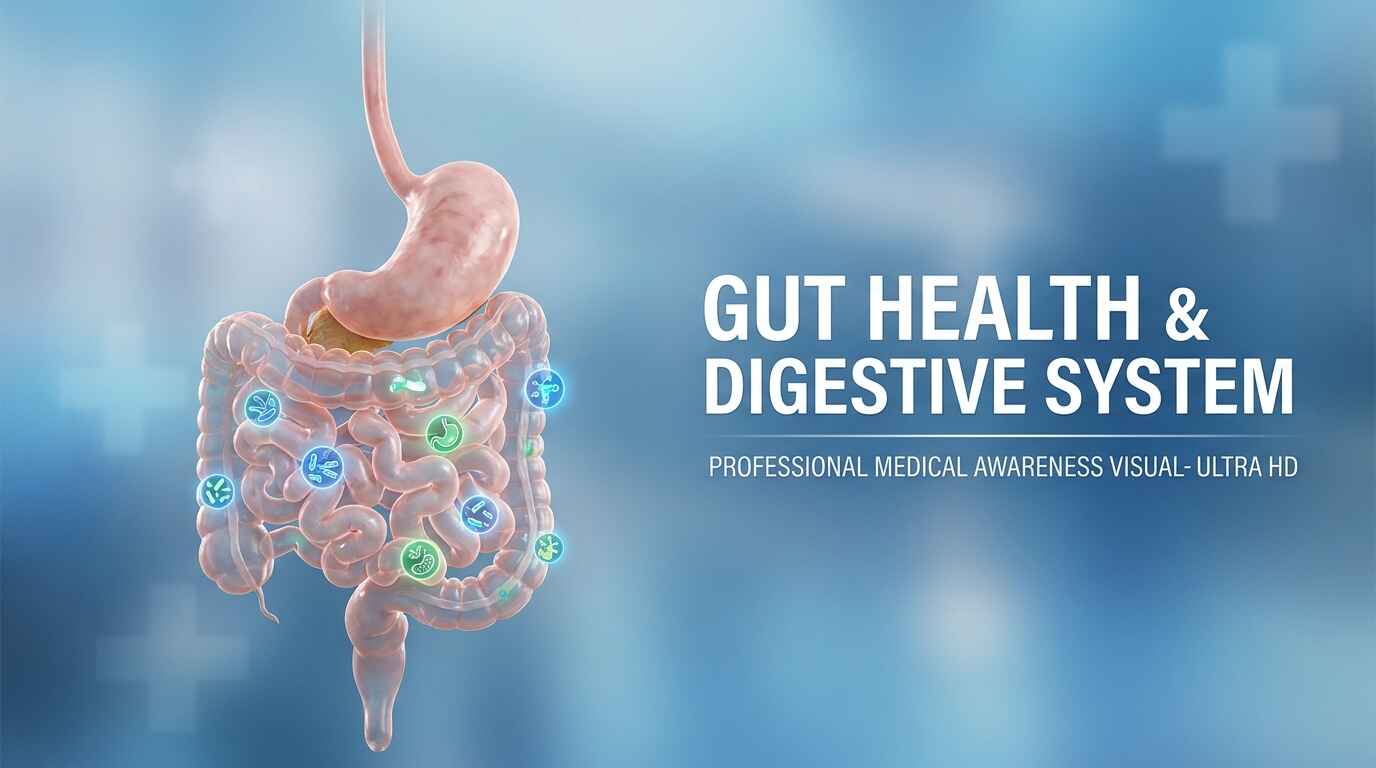
Most of us only think about our stomach when something goes wrong. Maybe you’re bloated after a big meal, or your tummy turns before a stressful day, or you feel tired for no clear reason. Gut health reaches well beyond digestion, though. Researchers are exploring links with your immune system, your mood and even your sleep, although they haven’t settled many of these questions yet.
This guide pulls the essentials into one place. We cover the signs your gut may be struggling, the everyday habits that contribute, how doctors investigate symptoms and the diet and lifestyle changes most health professionals suggest. You won’t find quick fixes here. You’ll find clear information that helps you talk to your GP and make small, steady changes at home.
What Is Gut Health?
When people talk about gut health, they usually mean two things: how well your digestive system works and how balanced the trillions of microbes in your intestines are. We call that community the gut microbiome. It includes bacteria, fungi and other tiny organisms. They help break down food, make some vitamins and communicate with your immune system.
A well-working gut moves food along at a comfortable pace and absorbs nutrients properly, so you don’t deal with regular discomfort. Scientists sometimes use the word dysbiosis when the microbial balance shifts. Studies link that shift with a range of health problems. Experts still can’t say which comes first, the imbalance or the condition.
Picture your gut as a busy hub, not a simple tube. It contains millions of nerve cells, which is why some people call it the “second brain”. That nerve network helps explain why stress and digestive symptoms so often turn up together.
Why Gut Health Matters for Your Overall Wellbeing
A large share of your immune cells sit in and around the gut lining. When that lining is irritated, your body’s defences can feel the effect. Some studies also suggest gut bacteria interact with chemicals that influence mood. That might explain why long-lasting digestive trouble sometimes comes with low mood, anxiety or brain fog. Researchers haven’t proven cause and effect.
Scientists are also looking at possible links between the gut and skin conditions, joint pain, weight and long-term metabolic health. The evidence is early, and not every symptom you have traces back to your gut. Looking after your digestion is still a sensible way to support your general health. It beats chasing each symptom on its own.
Common Signs Your Gut May Be Struggling
Gut problems rarely announce themselves loudly. They often build slowly, and it’s easy to shrug a symptom off as “just how my body is”. People commonly report the signs below, and many of them have other causes too:
- Bloating and trapped wind: a tight or full feeling in your tummy, often after eating
- Irregular bowel habits: constipation, diarrhoea, or swings between the two
- Ongoing tiredness: poor sleep, anaemia and thyroid problems can all cause it, so ask your GP if it doesn’t lift
- New food intolerances: trouble with foods that never bothered you before
- Skin flare-ups: eczema, acne or sensitive skin sometimes appear alongside gut symptoms
- Unexplained weight changes: gaining or losing weight without changing your diet or activity always deserves a GP visit
- Sleep trouble: difficulty falling or staying asleep sometimes goes hand in hand with digestive discomfort
- Low mood or stress sensitivity: researchers discuss these in connection with the gut-brain link, but plenty of other things cause them
One or two of these now and then rarely signals a problem. If several stick around or get worse, speak to your GP. A list can’t tell you the cause, and guessing often sends you in the wrong direction. If wind is your main complaint, our guide to stomach gas causes, symptoms and treatment goes into more detail.
Causes of Poor Gut Health
Gut problems seldom come from a single cause. A mix of everyday factors usually builds up over time. These are the most common ones:
A diet low in fibre and variety. If you eat mostly processed food and few fruits, vegetables and wholegrains, your helpful gut bacteria have little to feed on.
Ongoing stress. Your gut and brain talk constantly. Long periods of stress can change how your digestion moves and may affect the bacteria living there. Our nervous system regulation guide covers ways to calm your stress response, and our article on cortisol face looks at how stress can show up elsewhere in the body.
Poor sleep. Studies link short or irregular sleep with changes in gut bacteria. The relationship probably runs both ways, because gut discomfort can also keep you awake.
Repeated antibiotics. Antibiotics save lives, and you should always finish the course your doctor prescribes. Repeated courses can reduce the variety of your gut bacteria, and recovery may take weeks or months.
Too little movement. People who stay active tend to have a more varied gut microbiome. Researchers can’t yet say exactly why.
Alcohol and smoking. Both can irritate your digestive system and disturb its microbial balance over time. Regular heavy drinking also puts pressure on your liver, as our guide to fatty liver symptoms and early warning signs explains.
Not drinking enough. Too little fluid slows digestion and makes constipation more likely.
Spotting which of these fit your own routine is often the first practical step. You may find one or two stand out straight away.
How Is Gut Health Tested?
No single test measures “gut health”. If you have ongoing symptoms, your GP will look for specific conditions based on what you describe. These are the usual options:
Blood tests can check for signs of inflammation, coeliac disease, anaemia or nutrient deficiencies. If you suspect coeliac disease, keep eating gluten until you’ve been tested. Cutting it out first can make the result unreliable.
Stool tests can look for infection, inflammation or blood you can’t see. Your GP will explain which one suits your symptoms.
Breath tests sometimes help check for small intestinal bacterial overgrowth (SIBO) or lactose intolerance.
Endoscopy or colonoscopy lets a specialist look directly at the lining of your digestive tract. Doctors usually suggest these when symptoms are persistent or more concerning.
Food and symptom diaries are often the simplest first step. Write down what you eat and how you feel afterwards. Patterns can show up before any formal testing.
Be cautious with private gut test kits sold online that claim to analyse your microbiome from one stool sample. Microbiome science is exciting, but home testing is still developing. If you try one, take the results to a healthcare professional rather than acting on them alone.
Treatment Options for Gut Health
Treatment depends on what’s actually causing your symptoms, so a proper assessment beats guesswork. Healthcare professionals commonly discuss these approaches:
Dietary changes are usually the first step. A GP or registered dietitian can guide you, especially if you have a confirmed intolerance or condition.
Probiotics and prebiotics are sometimes suggested to support the balance of gut bacteria. Results vary a lot from person to person, and the evidence is limited.
Medication may be prescribed for specific problems, such as acid reflux, irritable bowel syndrome (IBS) or certain infections.
Stress support now forms part of care for some gut conditions, given how closely the gut and brain connect. That can include talking therapies and relaxation techniques.
Long-term conditions, such as coeliac disease or inflammatory bowel disease, need a longer plan managed by a specialist.
What settles one person’s bloating may do nothing for the next person. That’s why copying a social media trend can backfire. Start with your GP.
The Best Diet for Gut Health
What you eat feeds the bacteria in your digestive system, so diet gets most of the attention in gut health research. Health professionals mention these principles most often:
Prioritise fibre. Wholegrains, vegetables, fruit, beans and lentils all give your gut bacteria something to work with. Build variety into your week instead of repeating the same few foods. Add fibre gradually and drink plenty of fluids, or you may feel extra bloated at first.
Include fermented foods. Live yoghurt, kefir, sauerkraut and kimchi contain live microbes that may support gut diversity. Researchers are still studying how much long-term benefit they offer.
Drink enough. Water helps digestion and eases the constipation that often comes with gut discomfort.
Cut back on ultra-processed foods. Studies repeatedly link diets heavy in processed food and added sugar with lower gut bacteria diversity.
Eat a wide range of plants. Many dietitians say variety matters more than any single “superfood”. Different fruits, vegetables, nuts, seeds and pulses each feed different bacteria.
Keep alcohol modest. The NHS advises staying within 14 units a week, spread over several days. Drinking less may also be kinder to your gut lining.
You don’t need a dramatic overhaul, and most people can’t stick to one anyway. Add one extra portion of vegetables a day. Swap a sugary snack for a handful of nuts. Small changes like these last longer.
Lifestyle Tips to Prevent Gut Health Problems
Beyond food, a few everyday habits support your digestion:
- Move regularly. A daily walk of 20 to 30 minutes helps digestion and fits into most routines.
- Protect your sleep. Keep regular bedtimes where you can, because irregular sleep is linked with digestive upsets.
- Manage stress early. Breathing exercises, journaling or switching off your phone for an hour can ease the load on your gut.
- Slow down at meals. Eating quickly can make you swallow air, which leads to bloating.
- Take antibiotics only when prescribed. Never ask for them for a cold or flu, and always finish the course your GP gives you.
- Stop smoking if you smoke. Your GP or local stop smoking service can offer free support.
None of this has to happen overnight. Your gut responds better to steady habits than to short bursts of effort.
When Should You See a Doctor?
An occasional upset stomach is a normal part of life. Some symptoms need a GP appointment instead of home management:
- Blood in your stool, or black, tar-like stools
- Unexplained weight loss
- A change in your bowel habits that lasts three weeks or more
- Bloating on most days for three weeks or more
- Severe or worsening tummy pain
- Difficulty swallowing
- Ongoing tiredness alongside digestive symptoms
Most of these have common, treatable causes, but a GP can rule out anything more serious. Our overview of cancer symptoms, causes and prevention explains which changes doctors like to see early.
Call 999 (UK) or 911 (USA) if you vomit blood, pass a lot of blood or have sudden, severe tummy pain. If you’re unsure how urgent your symptoms are, NHS 111 can advise you in the UK.
Early conversations with a GP make a real difference, so don’t wait things out if something feels persistently “off”. For more detail on one common gut condition, read the NHS page on Irritable Bowel Syndrome (IBS).
The Bottom Line on Gut Health
Gut health touches digestion, energy, mood and immunity, but science hasn’t answered every question about how. The basics are simple. Eat plenty of fibre and a wide range of plants, drink enough, sleep well, stay active and manage stress. Be wary of any product promising to “reset” your gut. If symptoms last or worry you, your GP is the right place to start.
Frequently Asked Questions About Gut Health
What is the fastest way to improve gut health?
There’s no instant fix. Most health professionals suggest adding fibre gradually, drinking enough fluids and eating fewer ultra-processed foods. Small changes you can keep up work better than dramatic overhauls. If symptoms continue, speak to your GP rather than trying to treat them yourself.
Can stress really affect gut health?
Yes, it can. Your gut and brain talk through nerves and hormones, a link called the gut-brain axis. Stress can change how quickly food moves through your digestive system, and many people notice stomach upsets during tense weeks. If symptoms keep returning, ask your GP to check them.
Which foods are good for gut health?
Fibre-rich foods such as wholegrains, beans, lentils, fruit and vegetables feed your gut bacteria. Fermented foods like live yoghurt, kefir, sauerkraut and kimchi add live microbes. Variety matters more than any single superfood. Add fibre gradually and drink plenty of fluids to avoid extra wind.
Are probiotic supplements worth taking?
The evidence is mixed. Some studies suggest certain probiotics ease problems such as antibiotic-related diarrhoea, but results vary between people and products. Most healthy people don’t need them. Speak to your GP or pharmacist first, especially if you’re pregnant, have a weakened immune system or take other medicines.
How long does it take to improve gut health through diet?
It varies. Some people feel better within a few weeks of eating more fibre, drinking enough and cutting back on ultra-processed food. Others need longer, particularly with a condition such as IBS. Keep a symptom diary, and see your GP if nothing improves after several weeks.
Is bloating always a sign of poor gut health?
No. Occasional bloating is common and often follows large meals, fizzy drinks or eating quickly. Bloating on most days for three weeks or more, or bloating with weight loss, blood in your stool or pain, needs a GP appointment. Don’t assume it’s harmless if it keeps coming back.
Can gut health affect mental health?
Research suggests a link, but scientists haven’t shown that gut bacteria cause mood problems. Your gut and brain communicate constantly, so digestive symptoms often appear alongside low mood or anxiety. If you’re struggling with either, speak to your GP, who can look at both together.
Sources and further reading
Disclaimer: This article is for general information and education only. It isn’t medical advice, and it can’t diagnose or treat any condition or replace professional guidance. If you have persistent or worrying symptoms, speak to your GP or call NHS 111 (UK) for advice.


Very very useful information thanks