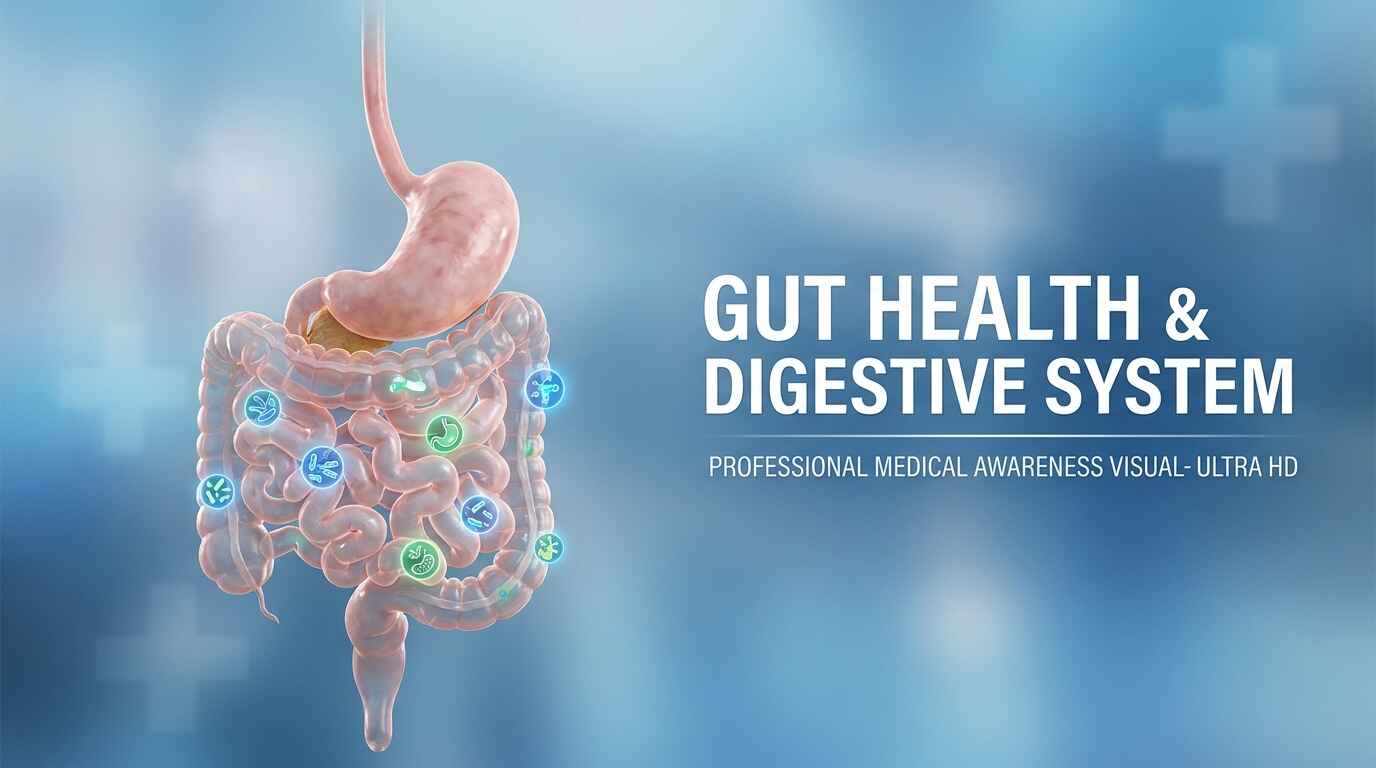
Most of us only think about our stomach when something goes wrong. A bit of bloating after a big meal, an upset tummy before a stressful day, maybe some ongoing tiredness we can’t quite explain. But research over the past decade has made one thing increasingly clear: gut health influences far more than digestion. It’s connected to your energy levels, your mood, your immune system and even how well you sleep at night.
This guide brings together everything you need to understand your gut health in one place — the warning signs your body might be sending you, the everyday habits that could be causing them, how doctors actually test for gut problems, and the diet and lifestyle changes that tend to make the biggest difference. Nothing here is about quick fixes or miracle cures. It’s simply the information laid out clearly, so you can have a more informed conversation with your GP and make small, sustainable changes at home.
What Is Gut Health?
When people talk about gut health, they’re usually referring to the balance and function of your digestive system — particularly the trillions of bacteria, fungi and other microbes living in your intestines, known collectively as the gut microbiome. A healthy gut has a diverse mix of these microorganisms working together to break down food, absorb nutrients, produce certain vitamins, and communicate with your immune system.
Good gut health means your digestive system is doing its job efficiently: food moves through at a comfortable pace, nutrients are absorbed properly, and you’re not left dealing with regular discomfort. Poor gut health, on the other hand, often shows up as an imbalance — sometimes called dysbiosis — where harmful bacteria begin to outnumber the beneficial ones. This imbalance has been linked by researchers to a wide range of issues that go well beyond the stomach.
It helps to think of the gut as a busy, interconnected hub rather than a simple tube that food passes through. It’s lined with millions of nerve cells, which is part of why scientists sometimes refer to it as the “second brain.” This gut-brain connection is one of the reasons digestive issues and mood or stress often appear together.
Why Gut Health Matters for Your Overall Wellbeing
Gut health rarely stays contained to the digestive system. Because such a large proportion of your immune system is based in the gut lining, an imbalanced gut may leave your body more vulnerable to inflammation and infection. Some research also suggests a connection between gut bacteria and how your body regulates mood-related chemicals, which is why persistent digestive issues are sometimes accompanied by low mood, anxiety or brain fog.
There’s also a growing body of research exploring links between gut health and skin conditions, joint discomfort, weight management and long-term metabolic health. None of this means every symptom you experience traces back to your gut — but it does mean that looking after your digestive system is one of the more overlooked ways of supporting your health as a whole, rather than treating each symptom in isolation.
This is exactly why gut health has become such a widely discussed topic among nutritionists, GPs and researchers alike — it sits at the crossroads of so many other areas of wellbeing.
Common Symptoms of Poor Gut Health
Gut health problems don’t always announce themselves loudly. Sometimes they build up gradually, and it’s easy to write off individual symptoms as “just how my body is.” Here are some of the most commonly reported signs that your gut health might need attention:
- Bloating and trapped wind — a feeling of fullness or tightness in the abdomen, often after eating
- Irregular bowel habits — this can mean constipation, diarrhoea, or swinging between the two
- Ongoing fatigue — feeling tired even after a full night’s sleep, which some research links to poor nutrient absorption
- Food intolerances — struggling to digest foods that never used to bother you
- Skin issues — flare-ups of eczema, acne or general skin sensitivity
- Unexplained weight changes — gaining or losing weight without changes to diet or activity
- Sleep disturbances — difficulty falling or staying asleep
- Low mood or increased stress sensitivity — linked to the gut-brain connection mentioned earlier
- Frequent illness — catching colds or infections more often than usual
Not everyone experiences the same combination of symptoms, and having one or two of these occasionally doesn’t necessarily point to a gut health problem. However, if several of these symptoms are persistent or worsening, it may be worth speaking to your GP.
Causes of Poor Gut Health
There’s rarely a single cause behind gut health issues — it’s usually a combination of everyday factors that build up over time. Some of the most common contributors include:
Diet low in fibre and variety. A diet heavy in processed foods and low in fruit, vegetables, and whole grains gives beneficial gut bacteria very little to feed on, which can allow less helpful bacteria to take over.
Chronic stress. Because the gut and brain are so closely connected, ongoing stress can directly affect digestion, gut movement and even the balance of bacteria living there.
Lack of sleep. Poor sleep has been associated with changes in gut bacteria diversity, creating something of a two-way relationship between rest and digestion.
Overuse of certain medications. Repeated courses of antibiotics, in particular, can significantly reduce the diversity of gut bacteria, sometimes taking months to recover.
Limited physical activity. Regular movement appears to support a more diverse and balanced gut microbiome, while a sedentary lifestyle may work against it.
Alcohol and smoking. Both have been shown in research to negatively affect the gut lining and microbial balance over time.
Dehydration. Not drinking enough water can slow digestion and contribute to constipation, which in turn affects overall gut comfort.
Understanding which of these factors apply to your own lifestyle is often the first practical step towards improving your gut health.
How Is Gut Health Tested?
If you’ve been experiencing ongoing symptoms, your GP has several ways of investigating what might be going on. It’s worth noting that “gut health” as a general concept isn’t something with one single test — rather, doctors look at specific markers and conditions depending on your symptoms.
Blood tests can check for markers of inflammation, coeliac disease, or nutrient deficiencies that sometimes point towards digestive issues.
Stool sample tests are commonly used to look for infection, inflammation, or blood that isn’t visible to the eye, and can sometimes give insight into the balance of gut bacteria.
Breath tests are often used to check for conditions such as small intestinal bacterial overgrowth (SIBO) or lactose intolerance.
Endoscopy or colonoscopy may be recommended in some cases to look directly at the lining of the digestive tract, particularly if symptoms are persistent or more serious.
Food diaries and symptom tracking are frequently the first and simplest step — your GP may ask you to keep a record of what you eat and how you feel afterwards, which can reveal patterns before any formal testing is needed.
It’s worth being cautious of private “gut health” test kits sold online that claim to analyse your microbiome from a single stool sample. While the science of the microbiome is genuinely exciting, many experts note that at-home testing in this area is still developing, and results should always be discussed with a healthcare professional rather than acted on alone.
Treatment Options for Gut Health
Treatment for gut health issues depends entirely on what’s actually causing them, which is why getting a proper diagnosis matters more than guessing. That said, there are some general approaches commonly discussed by healthcare professionals:
Dietary changes are usually the first line of support, often guided by a GP or registered dietitian, especially where a specific intolerance or condition has been identified.
Probiotics and prebiotics are sometimes suggested to help support a healthy balance of gut bacteria, although research suggests their effectiveness can vary significantly from person to person.
Medication, such as treatment for acid reflux, irritable bowel syndrome (IBS), or specific infections, may be prescribed depending on the diagnosis.
Stress management support, including talking therapies or relaxation techniques, is increasingly recognised as a genuine part of gut health treatment, given the strength of the gut-brain connection.
Addressing underlying conditions, such as coeliac disease or inflammatory bowel disease, involves a longer-term treatment plan managed by a specialist.
It’s important to stress that gut health treatment isn’t one-size-fits-all. What works well for one person’s bloating might do nothing for someone else’s, which is exactly why self-diagnosing from social media trends can be risky — always start with your GP.
The Best Diet for Gut Health
Diet is consistently one of the most talked-about factors when it comes to supporting gut health, and for good reason — what you eat directly feeds (or starves) the bacteria living in your digestive system. Here are some of the diet principles most commonly recommended:
Prioritise fibre. Wholegrains, vegetables, fruit, beans and lentils all provide fibre that beneficial gut bacteria thrive on. Aim to build variety into your meals rather than relying on the same few foods.
Include fermented foods. Yoghurt, kefir, sauerkraut and kimchi contain live bacteria that may support gut diversity, although research is still exploring exactly how much benefit they provide long-term.
Stay hydrated. Water supports healthy digestion and helps prevent the constipation that often accompanies poor gut health.
Limit ultra-processed foods. Diets high in processed foods and added sugar have repeatedly been linked in research to reduced gut bacteria diversity.
Eat a wide variety of plants. Some researchers suggest that eating a broad range of different plant foods each week — rather than focusing on any single “superfood” — may be more beneficial for gut diversity than any one ingredient alone.
Moderate alcohol intake. Reducing alcohol consumption has been associated with improvements in gut lining health over time.
It’s worth remembering that dramatic diet overhauls aren’t usually necessary or sustainable. Small, consistent changes — like adding one extra portion of vegetables a day, or swapping a sugary snack for a handful of nuts — tend to be more realistic and easier to stick with long term.
Lifestyle Tips to Prevent Gut Health Problems
Alongside diet, several everyday lifestyle habits play a meaningful role in maintaining good gut health:
- Move regularly. Even a daily 20–30 minute walk has been associated with improved gut bacteria diversity in research.
- Prioritise sleep. Aim for a consistent sleep schedule, as irregular sleep patterns have been linked to gut imbalances.
- Manage stress proactively. Techniques such as breathing exercises, journaling or simply setting aside time to switch off can support the gut-brain connection.
- Chew food slowly. Eating too quickly can affect digestion and lead to bloating.
- Avoid unnecessary antibiotic use. Always follow your GP’s guidance, but be aware that repeated antibiotic courses can affect gut bacteria balance.
- Limit smoking. Reducing or quitting smoking has been shown to support a healthier gut lining over time.
None of these changes need to happen overnight. Gut health tends to respond best to gradual, sustained habits rather than short bursts of intense effort.
When Should You See a Doctor?
While occasional bloating or an upset stomach is a normal part of life, certain symptoms should always prompt a visit to your GP rather than being managed at home. These include:
- Blood in your stool
- Unexplained weight loss
- Persistent changes in bowel habits lasting more than a few weeks
- Severe or worsening abdominal pain
- Difficulty swallowing
- Ongoing fatigue alongside digestive symptoms
Gut health is an area where early conversations with a healthcare professional genuinely make a difference. If something feels persistently “off,” it’s always worth getting checked rather than waiting it out. For further guidance, the NHS page on Irritable Bowel Syndrome (IBS) is a trusted resource worth reading.
Frequently Asked Questions
What is the fastest way to improve gut health?
There’s no instant fix, but increasing fibre intake, staying hydrated, and reducing processed food are generally considered the most effective starting points, alongside speaking to a GP about any persistent symptoms.
Can stress really affect gut health?
Yes — the gut and brain are closely linked through what’s known as the gut-brain axis, meaning stress can directly influence digestion, gut movement and bacterial balance.
Are probiotic supplements worth taking?
Research on probiotics is still developing, and their effectiveness varies from person to person. It’s best to discuss suitability with a GP or pharmacist rather than self-prescribing.
How long does it take to improve gut health through diet?
Some people notice changes within a few weeks of consistent dietary improvements, though everyone’s timeline differs depending on individual health factors.
Is bloating always a sign of poor gut health?
Not necessarily — occasional bloating is common and often linked to specific foods or eating too quickly. Persistent or severe bloating, however, is worth discussing with a GP.
Can gut health affect mental health?
Emerging research suggests a connection between gut bacteria and mood regulation, which is part of why digestive issues and low mood or anxiety sometimes occur together.
Disclaimer: This article is for general awareness and informational purposes only and does not constitute medical advice. It is not intended to diagnose, treat, or replace professional medical guidance. If you are experiencing persistent or concerning symptoms, please consult your GP or contact NHS 111 for advice.
