Every year, thousands of women across the UK and USA experience a cardiac event without ever knowing it happened. The silent heart attack signs in women are so subtle, so easily confused with everyday tiredness, indigestion, or stress, that the majority go completely unnoticed — sometimes for months or even years. By the time the damage is discovered, it has often already taken a serious toll on the heart muscle. This article is not meant to frighten you. It is meant to make sure you are armed with the knowledge that could one day save your life, or the life of someone you love.
Heart disease remains the leading cause of death among women in both the United Kingdom and the United States, yet it continues to be dangerously misunderstood as a “man’s condition.” The truth is that women’s hearts are equally vulnerable — they simply speak a different language when something goes wrong. Understanding that language starts here.
What Exactly Is a Silent Heart Attack?
A silent heart attack — medically referred to as a silent myocardial infarction (SMI) — occurs when blood flow to part of the heart is blocked or severely restricted, causing damage to the heart muscle, but without the dramatic, unmistakable symptoms most people associate with a cardiac event. There is no clutching of the chest. No collapsing dramatically on the floor. Instead, there may be nothing more than a vague sense of fatigue, a strange discomfort in the jaw, or a passing feeling of breathlessness that lasts only a few minutes.
Research suggests that silent heart attacks account for approximately 45% of all heart attacks, and women are disproportionately affected. A landmark study published in the journal Circulation found that women were significantly more likely than men to experience a myocardial infarction without recognising it for what it was. The consequences of this are severe: without timely intervention, the damaged heart tissue cannot heal properly, increasing the risk of future — and potentially fatal — cardiac events.
What makes this condition particularly dangerous is the delay in treatment. Every minute that blood flow to the heart is restricted, more cardiac muscle cells die. The phrase used by cardiologists — “time is muscle” — could not be more apt. When a silent heart attack goes unidentified, there is no opportunity to restore blood flow, no chance for medication, and no intervention that could limit the damage.
Understanding the silent heart attack signs in women is therefore not merely useful information — it is potentially life-saving knowledge that every woman, and the people around her, ought to have.
Silent Heart Attack Signs in Women: The Symptoms You Must Know
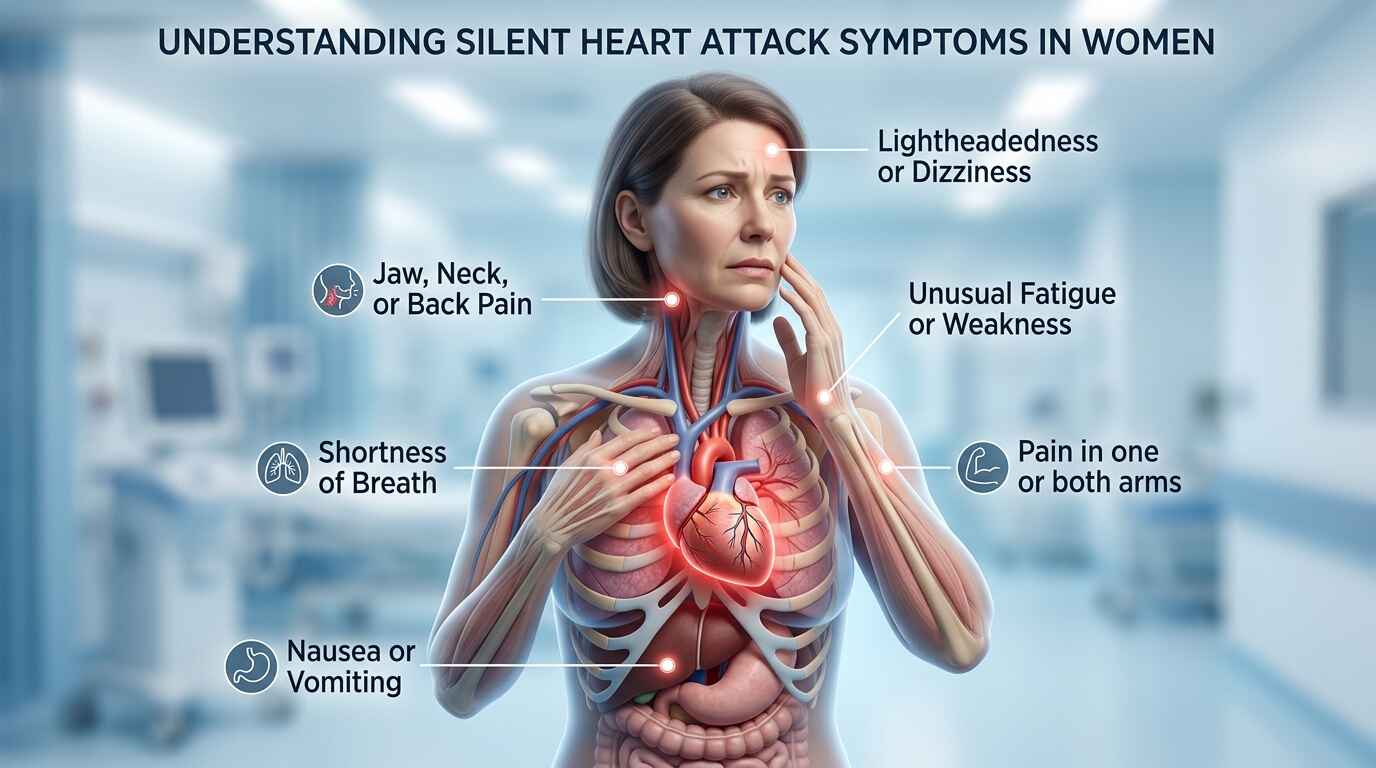
This is where the conversation becomes critically important. The silent heart attack signs in women are so subtle, so easily confused with everyday tiredness, indigestion, or stress, that the majority go completely unnoticed. Women’s bodies often respond differently to cardiac distress, and the signals they send are far more ambiguous.
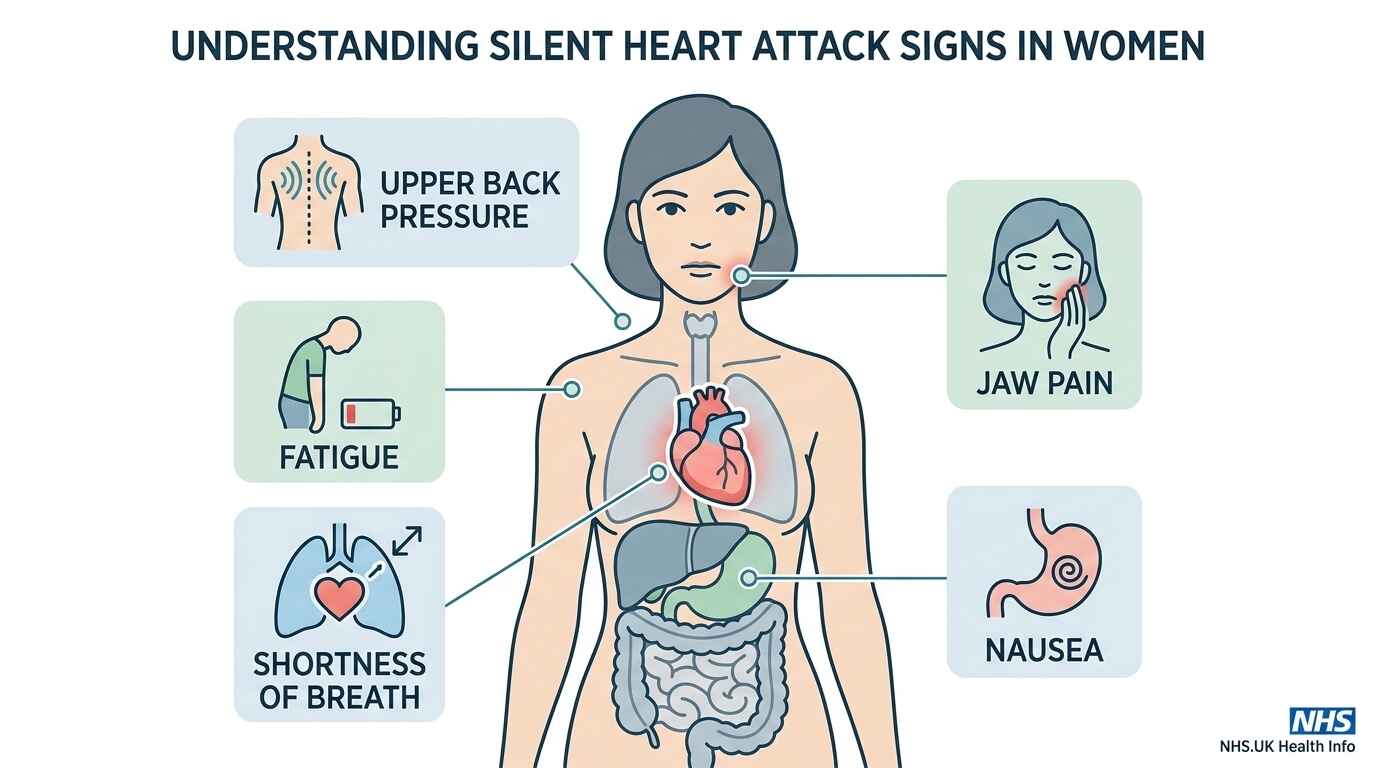
Here are the key symptoms that women most commonly report before, during, and after a silent cardiac event:
Unusual and Overwhelming Fatigue
One of the most consistently reported symptoms is an extreme sense of tiredness that feels completely disproportionate to physical activity or sleep patterns. Women often describe feeling as though they “cannot get enough rest,” even after a full night’s sleep. This type of fatigue is different from the ordinary tiredness of a busy day — it is heavy, persistent, and unrelenting. Many women later recall feeling this way for several days or weeks before realising something was wrong with their heart.
Shortness of Breath Without Exertion
Experiencing breathlessness whilst doing very little — or even whilst lying down — is another common presentation. Women may notice they feel slightly winded after walking up a short flight of stairs, or that they feel oddly breathless during activities they have always managed with ease. This symptom is frequently dismissed as a sign of being “out of shape” or attributed to anxiety.
Discomfort in the Jaw, Neck, or Upper Back
Whereas men are more likely to report crushing chest pain during a cardiac event, women are significantly more likely to experience referred pain — discomfort that originates in the heart but is felt elsewhere. The jaw, neck, upper back, and even the shoulders are common locations. This is often mistaken for dental pain, tension headaches, muscle strain, or a stiff neck.
Nausea and Stomach Upset
Digestive symptoms including nausea, stomach pain, vomiting, and a general sense of abdominal discomfort can all be silent heart attack signs in women. Because these symptoms so closely mimic food poisoning, acid reflux, or general gastric issues, they are almost universally misattributed. Many women seek treatment for a “stomach bug” during what is, in fact, a cardiac event.
Chest Pressure, Tightness, or Discomfort
It would be misleading to suggest that women never experience chest-related symptoms during a heart attack — they do. However, the sensation is often described less as the crushing, vice-like pain depicted in popular media, and more as a tightness, pressure, squeezing, or heaviness. It may come and go. It may feel more like indigestion than anything cardiac. This is why it is so frequently ignored.
Dizziness and Light-Headedness
Feeling suddenly dizzy, faint, or unsteady on one’s feet can indicate that the heart is not pumping blood efficiently to the brain. Women may experience episodes of light-headedness that last only a few seconds but recur over several days. This, too, is regularly dismissed as low blood sugar, dehydration, or anxiety.
Cold Sweats
Breaking into a cold sweat — particularly one that appears suddenly and without a clear cause such as heat or physical activity — is a warning sign that deserves serious attention. This type of perspiration is the body’s stress response to a cardiac emergency. In women, it is often attributed to hormonal fluctuations, particularly in perimenopausal women, making it even easier to overlook.
Why Are These Signs So Easily Missed?
Understanding why these symptoms go unrecognised is just as important as knowing what they are. There are several interconnected reasons why the silent heart attack signs in women are so frequently dismissed — both by women themselves and by healthcare professionals.
The “Heart Attack Doesn’t Look Like This” Misconception
Decades of public health messaging, television dramas, and even medical textbooks have portrayed heart attacks as events that happen to men — typically depicted as a sudden, dramatic collapse accompanied by severe chest pain. This cultural shorthand has had a devastating effect on women’s ability to recognise and act on their own symptoms. When a woman’s experience doesn’t match this image, she is far more likely to wait and see rather than seek immediate help.
Symptoms That Mimic Everyday Conditions
The overlap between cardiac symptoms and common everyday complaints is significant. Fatigue, nausea, breathlessness, and back pain are all experiences that women regularly attribute to stress, menstruation, perimenopause, poor sleep, or simply “overdoing it.” The ambiguity of these symptoms creates a very real barrier to timely help-seeking behaviour.
Diagnostic Gaps in Healthcare
Studies have repeatedly shown that women presenting to emergency departments with cardiac symptoms are less likely to receive prompt investigation than men presenting with similar complaints. A 2020 British Heart Foundation report highlighted that women in the UK were 50% more likely than men to receive an incorrect diagnosis following a heart attack. This is not a problem unique to the UK — American research has consistently demonstrated comparable disparities.
Women Prioritising Others Over Themselves
Societal and cultural expectations often lead women to minimise their own symptoms and delay seeking help for fear of causing inconvenience, appearing dramatic, or being told they are overreacting. Many women later recount having known something was wrong but having convinced themselves it would pass.
Who Is Most at Risk? Understanding the Risk Factors
Whilst any woman can experience a silent cardiac event, certain factors significantly elevate the risk. Awareness of personal risk factors is a powerful first step in prevention and early detection.
Age
The risk of heart disease in women increases markedly after the menopause, typically around the age of 50–55. Before the menopause, oestrogen offers some degree of cardiovascular protection. Once oestrogen levels fall, this protection diminishes, and the risk profile begins to resemble that of men. However, it is crucial to note that younger women are not immune — heart attacks in women under 50 are on the rise in both the UK and USA.
High Blood Pressure
Hypertension — persistently elevated blood pressure — is one of the most significant modifiable risk factors for cardiac events in women. It places constant strain on arterial walls, contributes to plaque build-up, and dramatically increases the likelihood of a cardiac event. Many women live with undiagnosed high blood pressure for years.
Type 2 Diabetes
Women with type 2 diabetes face a considerably elevated cardiovascular risk compared to non-diabetic women. Research consistently shows that diabetes erodes the cardioprotective advantage that women typically enjoy over men in middle age, effectively equalising — and in some analyses, surpassing — the cardiac risk seen in diabetic men.
Smoking
Smoking accelerates the development of atherosclerosis (hardening and narrowing of the arteries) and is a significant independent risk factor for heart attacks in women. The cardiovascular risk associated with smoking is proportionally greater in women than in men, making cessation one of the single most impactful health decisions a woman can make.
Family History
A family history of heart disease — particularly in a first-degree relative (parent or sibling) who experienced a cardiac event before the age of 65 — substantially increases a woman’s own risk. This genetic predisposition should be discussed openly with a GP and factored into routine cardiovascular health checks.
Mental Health and Chronic Stress
Psychological stress, depression, and anxiety have all been linked to increased cardiovascular risk, with emerging evidence suggesting these associations may be stronger in women than in men. Chronic activation of the body’s stress response contributes to inflammation, elevated cortisol, disrupted sleep, and behaviours such as poor diet and inactivity — all of which compound cardiac risk over time.

What Happens to the Body During a Silent Heart Attack?
To truly appreciate why the silent heart attack signs in women matter, it helps to understand what is happening physiologically during one of these events. A myocardial infarction — silent or otherwise — occurs when one of the coronary arteries supplying oxygenated blood to the heart muscle becomes blocked. This blockage is most commonly caused by a build-up of plaque (atherosclerosis) that ruptures, triggering the formation of a blood clot.
When blood flow is cut off, the affected area of heart muscle begins to starve of oxygen. Within minutes, cells start to die. This process — called myocardial necrosis — is irreversible. The dead tissue is eventually replaced by scar tissue, which does not contract the way healthy muscle does. Depending on how much of the heart was affected and for how long, this can leave lasting impairment to the heart’s pumping ability.
In a “typical” (non-silent) heart attack, the pain and distress are severe enough to prompt immediate help-seeking. In a silent event, the absence of overwhelming symptoms means this process occurs without any intervention, leaving behind scar tissue that quietly diminishes the heart’s function. When discovered later — often during a routine ECG or echocardiogram — the evidence of a previous cardiac event can come as a profound shock to both patient and clinician.
How Is a Silent Heart Attack Diagnosed?
Because the event itself passes without triggering alarm, silent heart attacks are most frequently discovered retrospectively — during investigations carried out for other reasons, or during routine cardiac screening. There are several diagnostic tools that can identify the evidence of a previous silent cardiac event.
Electrocardiogram (ECG)
An ECG records the electrical activity of the heart and can reveal abnormal patterns consistent with previous myocardial damage. Specific changes in the ECG trace — such as the presence of Q waves or ST-segment abnormalities — can indicate that part of the heart muscle has been damaged, even if no acute event was ever experienced.
Blood Tests (Troponin Levels)
During and shortly after a heart attack, the heart releases a protein called troponin into the bloodstream. Elevated troponin levels in a blood test can confirm cardiac muscle damage. Whilst this is most useful in the acute setting, troponin testing is increasingly used in broader cardiac risk assessments.
Echocardiogram
An echocardiogram uses ultrasound to create real-time images of the heart’s structure and function. It can identify areas of the heart wall that are moving abnormally — a hallmark of previous ischaemic damage — and assess the overall pumping efficiency of the heart (ejection fraction).
Cardiac MRI
Cardiac MRI is one of the most sensitive tools available for identifying the scar tissue left behind by a silent myocardial infarction. It can detect even small areas of damage that other tests might miss, making it particularly valuable in women who present with symptoms but have initially normal ECG or blood test results.
For comprehensive and up-to-date clinical guidance on heart attack symptoms and diagnosis, the British Heart Foundation provides excellent resources for both patients and healthcare professionals.
What Should You Do If You Suspect a Silent Heart Attack?
If you are experiencing any combination of the symptoms described in this article — particularly if they are new, persistent, or occurring in clusters — the most important thing you can do is act promptly. Do not minimise your symptoms. Do not wait and see. Do not convince yourself it is “just stress.”
In an Acute Situation
If you are experiencing symptoms that you believe could be cardiac in nature — including any chest discomfort, unexplained breathlessness, jaw or arm pain, or cold sweats — call 999 (UK) or 911 (USA) immediately. Chewing a single 300mg aspirin (if you are not allergic and have no contraindications) whilst waiting for emergency services may help limit clot formation, but always follow the guidance of the emergency operator.
For Non-Acute Concerns
If your symptoms are vague, recurring, or simply concerning you, make an appointment with your GP as soon as possible. Be specific about your symptoms. Keep a diary if necessary. Ask for an ECG. Be persistent if you feel your concerns are not being taken seriously — you are your own best advocate.
Routine Cardiovascular Screening
Women over 40, or those with any of the risk factors outlined earlier in this article, should discuss routine cardiovascular screening with their GP. In the UK, the NHS Health Check programme offers free cardiovascular assessments to adults between 40 and 74 every five years. In the USA, the American Heart Association recommends regular blood pressure, cholesterol, and blood glucose monitoring as part of routine healthcare.
Lifestyle Changes That Can Reduce Your Risk
Whilst no lifestyle change can guarantee the prevention of a silent cardiac event, there is substantial evidence that certain habits significantly reduce cardiovascular risk in women.
Move Your Body Daily
Regular physical activity strengthens the heart, improves circulation, reduces blood pressure, and supports healthy weight management. The NHS recommends at least 150 minutes of moderate-intensity aerobic activity per week for adults. Even brisk walking for 30 minutes a day, five days a week, can have measurable cardiovascular benefits.
Eat a Heart-Healthy Diet
A diet rich in fruits, vegetables, whole grains, lean proteins, and healthy fats — and low in processed foods, added sugars, and excessive salt — supports cardiovascular health. The Mediterranean dietary pattern, in particular, has a strong evidence base for heart disease prevention in women.
Stop Smoking
Quitting smoking is, without question, one of the most powerful things a woman can do for her heart. Within just one year of stopping, the excess cardiovascular risk associated with smoking is halved. Within fifteen years, the risk approaches that of a lifelong non-smoker.
Manage Stress Actively
Chronic psychological stress is a genuine cardiovascular risk factor. Incorporating stress-management practices — whether through mindfulness, therapy, exercise, social connection, or simply regular rest — is an investment in long-term heart health, not an indulgence.
Know Your Numbers
Blood pressure, cholesterol, and blood glucose levels are all modifiable risk factors that can be monitored and managed. Women who know their numbers and work with their healthcare provider to keep them within healthy ranges are significantly better positioned to reduce their cardiac risk over time.
Related Health Topics Worth Reading
Understanding the silent heart attack signs in women is part of a broader picture of women’s cardiovascular health. You may also find the following topics valuable:
- High Blood Pressure Symptoms in Women: What to Watch For
- Perimenopause and Heart Palpitations: Is There a Connection?
- How Chronic Stress Affects Women’s Heart Health
- Cholesterol Levels in Women: Everything You Need to Know
Frequently Asked Questions: Silent Heart Attack Signs in Women
Can you have a silent heart attack and feel completely normal?
Yes. By definition, a silent heart attack produces symptoms so mild or atypical that they are either not noticed at all, or are attributed to something else entirely. Some women report feeling vaguely “off” for several days around the time of a silent cardiac event, whilst others experience no perceptible symptoms whatsoever. The absence of pain does not mean the absence of damage.
How would I know if I had a silent heart attack in the past?
Silent heart attacks are most commonly identified retrospectively through tests such as an ECG (which may show characteristic abnormalities), an echocardiogram (which can reveal areas of impaired wall motion), or a cardiac MRI (which can detect scar tissue). If you suspect you may have had an unrecognised cardiac event, speak to your GP about appropriate investigations.
Are silent heart attacks more dangerous than regular heart attacks?
Both types cause genuine damage to the heart muscle. However, silent heart attacks carry specific dangers because they are not treated at the time they occur. This means no clot-dissolving medication, no intervention to restore blood flow, and no opportunity to limit the damage. Studies have suggested that individuals who have had a silent myocardial infarction face a similar mortality risk to those who had a recognised event.
What age are women most at risk of a silent heart attack?
Risk increases significantly after the menopause — typically around age 50–55 — as oestrogen’s cardioprotective effects diminish. However, women in their 30s and 40s are not immune, particularly those with risk factors such as high blood pressure, diabetes, smoking, obesity, or a family history of heart disease.
Can anxiety mimic silent heart attack signs in women?
Yes — and this is part of what makes the silent heart attack signs in women so difficult to identify. Anxiety can produce chest tightness, breathlessness, palpitations, dizziness, and nausea — all of which overlap with cardiac symptoms. When in doubt, always seek medical evaluation rather than self-diagnosing.
Is there a test that can predict a silent heart attack before it happens?
There is no single definitive predictive test, but a comprehensive cardiovascular risk assessment — incorporating blood pressure, cholesterol, blood glucose, lifestyle factors, and family history — can provide a meaningful picture of an individual’s overall cardiac risk. Advanced imaging such as coronary artery calcium scoring can also help identify individuals at higher risk of future events.
⚠️ Medical Disclaimer
This article is intended for general informational and health awareness purposes only. It does not constitute medical advice, diagnosis, or treatment. The content provided here should not be used as a substitute for professional medical consultation, diagnosis, or treatment from a qualified healthcare provider. Always seek the advice of your GP, cardiologist, or other qualified health professional with any questions you may have regarding a medical condition. Never disregard professional medical advice or delay seeking it because of something you have read in this article. If you believe you are experiencing a medical emergency, call 999 (UK) or 911 (USA) immediately.
