Introduction
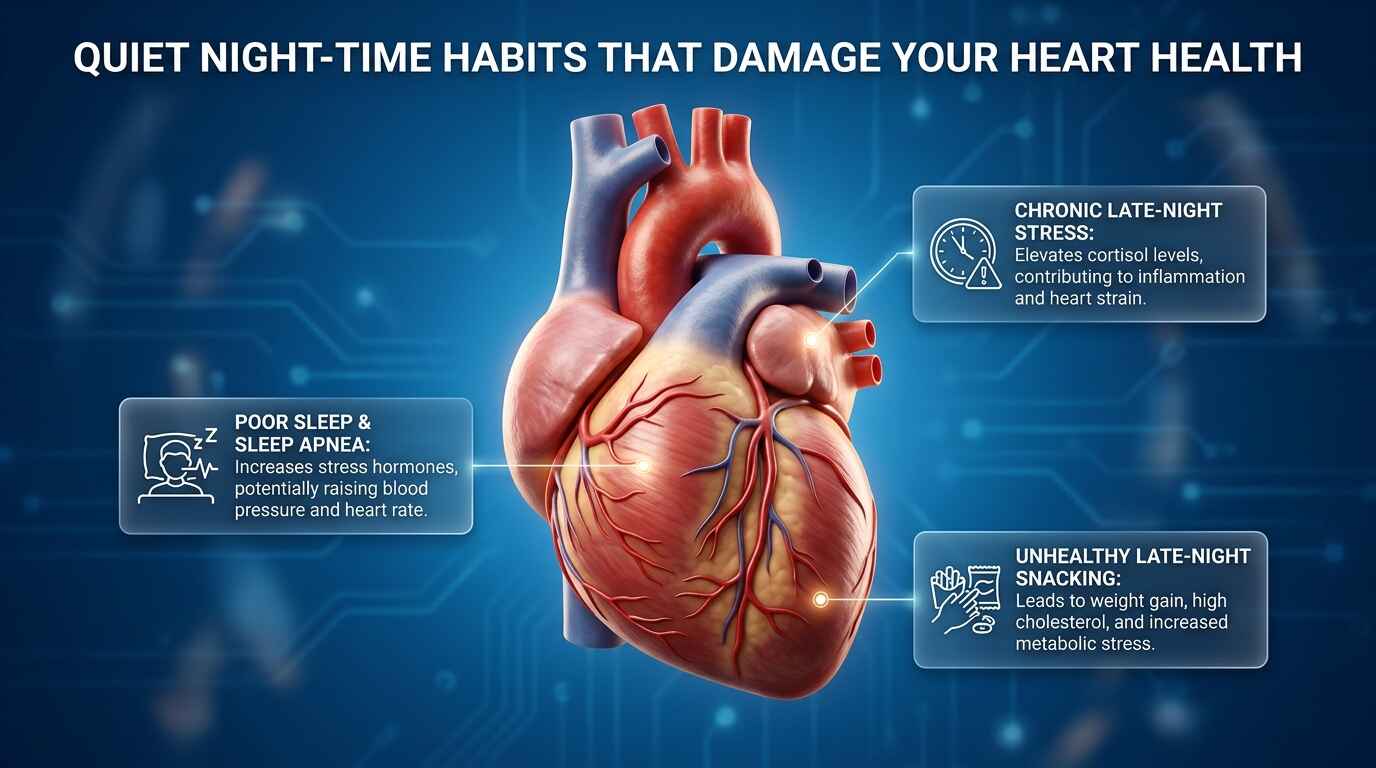
Many people focus on diet and exercise when thinking about heart health, but night-time habits that quietly damage your heart are often ignored. What you do in the evening and before sleep can influence how your heart functions overnight and how well your body recovers.
Late nights, poor sleep routines, and unhealthy evening choices may not cause immediate symptoms, but over time they can quietly affect heart awareness. This article is educational and awareness-based, helping you understand which habits may matter and why making small changes at night can support long-term wellbeing.
Why Night-Time Habits Matter for Heart Awareness
Your body uses night-time to rest, repair, and rebalance. The heart, like other organs, benefits from calm routines and quality sleep. When night-time habits are disrupted, the body may stay in a state of alert instead of rest.
Awareness of night-time habits that quietly damage your heart is important because these habits often feel harmless. Many people repeat them daily without realising their long-term impact on overall heart wellness.
Night-Time Habits That Quietly Damage Your Heart
Below are common habits that research and health awareness sources frequently associate with heart strain when practised consistently at night.
1. Sleeping Too Late Every Night
Going to bed very late regularly can disturb your natural body rhythm. Your heart follows a daily pattern influenced by sleep and wake cycles. When sleep timing is irregular, the body may not fully relax.Late nights may also reduce total sleep duration, which affects how well the body recovers. Over time, this pattern can quietly add stress to heart function.
2. Using Your Phone or Laptop Before Bed
Bright screens emit blue light that can delay natural sleep signals. When sleep is delayed or fragmented, the heart may not enter its most relaxed overnight state.
Scrolling social media or watching intense content late at night keeps the brain active, which can increase alertness when the body should be calming down.
3. Eating Heavy Meals Late at Night
Late-night heavy meals force the body to focus on digestion instead of rest. This can lead to discomfort, disrupted sleep, and overnight strain on internal systems.
Heart awareness experts often suggest allowing enough time between dinner and bedtime to let the body settle naturally.
4. Drinking Caffeinated Drinks in the Evening
Tea, coffee, energy drinks, and some fizzy drinks contain caffeine that can remain in the body for hours. Consuming them late may increase heart rate and delay sleep.
Even if you fall asleep, caffeine can reduce sleep quality, limiting the body’s natural recovery time.
5. Sleeping With the TV On
Many people fall asleep watching television, but background noise and flashing light can interrupt deep sleep stages. Deep sleep is essential for physical recovery and relaxation.
Shallow or disturbed sleep may reduce the heart’s opportunity to rest efficiently overnight.
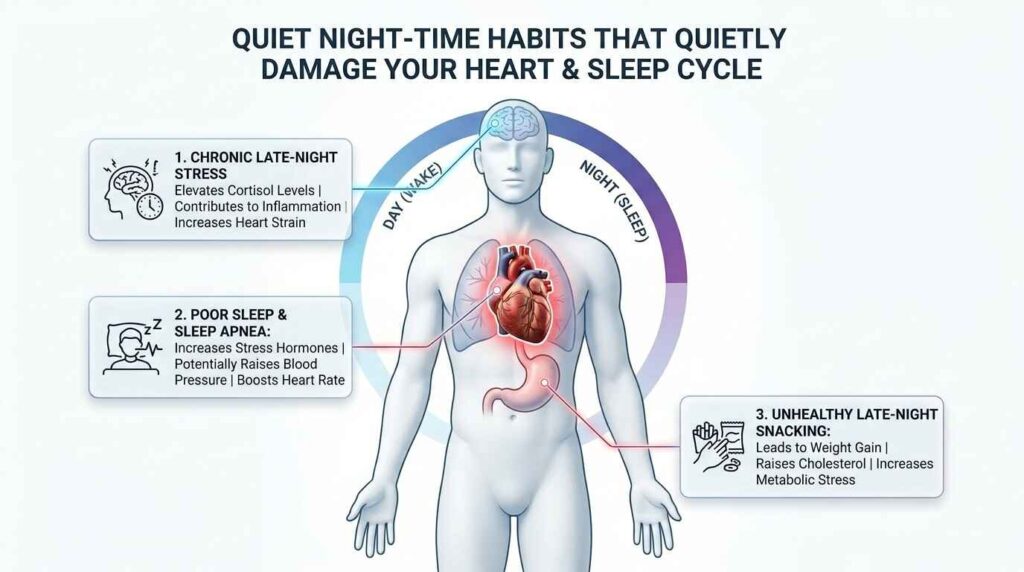
6. High-Stress Thinking Before Sleep
Mentally replaying stressful events, worrying, or overthinking at night can keep the body in a stress response. This may affect heart rhythm and relaxation.
Creating a calm mental environment before sleep supports overall night-time recovery.
7. Inconsistent Sleep Schedule
Sleeping at different times every night confuses the body clock. The heart benefits from predictable rest patterns just like the brain.
A consistent sleep routine helps the body prepare for rest more efficiently, supporting overnight balance.
8. Drinking Alcohol Close to Bedtime
Although alcohol may make you feel sleepy, it often disrupts deeper sleep stages later in the night. Poor-quality sleep can affect how refreshed the body feels the next day.
Awareness around alcohol timing is important for maintaining healthy night-time routines.
9. Sleeping in an Uncomfortable Environment
Noise, excessive light, poor mattress support, or extreme room temperatures can reduce sleep quality. When sleep is repeatedly disturbed, the body may not fully recover.
Creating a comfortable sleep environment supports overall rest and heart awareness.
10. Skipping Wind-Down Time
Going straight from busy activities to bed gives the body little time to slow down. A calm wind-down routine signals that it’s time to rest.Simple habits like light stretching, reading, or breathing exercises can help the body relax naturally.
How Small Changes Can Make a Difference
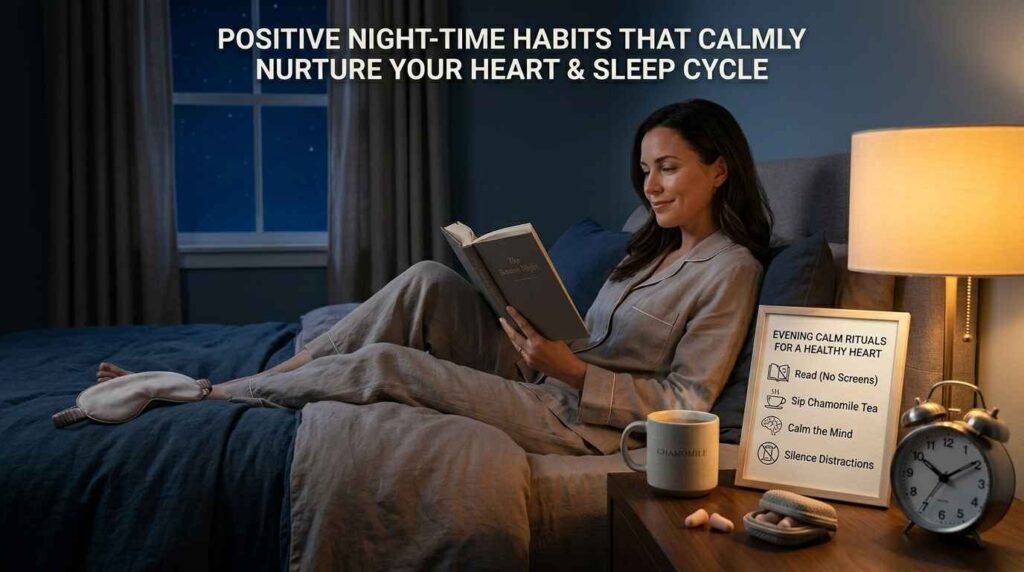
You don’t need extreme changes. Even small adjustments to night-time habits can support better sleep quality and overall wellbeing.
Examples include:
- Setting a regular bedtime
- Reducing screen use before sleep
- Choosing lighter evening meals
- Creating a calm sleep environment
These awareness-based steps support healthier routines without making medical claims.
What Health Authorities Say About Sleep and Heart Awareness
Reputable health organisations highlight the importance of quality sleep as part of overall heart wellbeing.
For general heart health guidance and lifestyle awareness, you can explore information from the UK’s official health service:
NHS Heart Health Guidance
Frequently Asked Questions (FAQ)
Do night-time habits really affect heart awareness?
Night-time routines influence sleep quality and relaxation, which play a role in overall wellbeing and body recovery.
Is staying up late occasionally harmful?
Occasional late nights are normal, but consistent patterns may affect sleep balance over time.
Can improving sleep routines support heart awareness?
Yes, calm and consistent sleep routines support natural body rhythms and overall wellness.
Should I stop using my phone at night completely?
Reducing screen time before bed can help improve sleep quality and relaxation.
Related Articles
- How High Cholesterol Affects Your Health: Causes, Symptoms, and Prevention Tips | Best Ways to Manage Cholesterol Levels
- Heart Blockage Symptoms, High Blood Pressure & Blood Sugar Control: Causes, Treatment & Natural Remedies
- 16 Proven Home Remedies for Glowing Skin: Natural, Effective & Easy Tips for Radiant Complexion
Disclaimer
This article is for educational and awareness purposes only. It does not provide medical advice, diagnosis, or treatment. Always consult a qualified healthcare professional for personal health concerns.
